Author: The Bookly Club

What Happened to Cinderella?

How many fairy tales have been made into movies? Too many to count, so we won’t. But let’s add to the list Disney’s new live-action version of Cinderella. Given that this is another in a very long line of Cinderella remakes, it surprised us with great reviews and opening numbers. Although maybe it shouldn’t considering it was directed by Kenneth Branagh (Academy Award nominated actor and director). It premiered mid-March outdoing Fifty Shades of Grey with a $135 million opening weekend. AND it scored 84% on rotten tomatoes. We guess there’s no denying fairy tales are a hit. But does anyone even remember where they came from? Fairy tales started as short stories filled with folkloric characters portraying a certain legend or lore. They were found in all different cultures, each with its own take on particular life lessons, and they weren’t too kid-friendly. In one of the oldest tales of Cinderella for example, she is a slave girl from Thrace. And, well, it’s not the ‘fairy tale’ story we know today. In fact, some think it was the story of a real woman …
Gillian on Film, Again

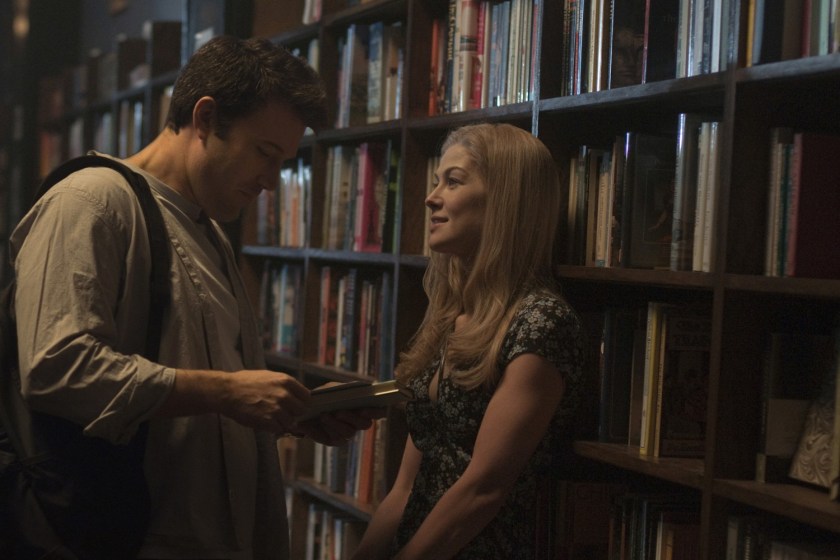
If you haven’t heard of Gillian Flynn, or at least Gone Girl, we can just assume you’ve been living under a rock for the past few years. But assuming you do know about her books, and the latest movie, do you also know about the other movies in the works, the TV show, and the sequel? Well, read on and we’ll fill you in… First, in case you’ve recently come out from under the aforementioned rock to join civilization, here’s what you need to know about Gillian Flynn… She’s an author, and now also a screenwriter, who was born in Kansas City, Missouri (where a lot of her books take place). As a young girl she was painfully shy and escaped into the world of books and the horror films her father took her to see. Such interests have molded her into an author of uniquely dark fiction that takes seemingly normal towns filled with seemingly normal people and twists it into something deliciously eerie and broken. Initially she attempted a career in police journalism after getting a Masters in degree in …

March Book

It’s finally here, our first Bookly Club book! First things first. As you may already know, each book we read is meant to fit the time of year in which we read it. And the theme for this month is “Screenplay.” Did you spend any time this winter watching the Golden Globes, SAG Awards or Oscars? Well, we just passed awards season, and since we’re stuck in bitterly-cold climates (if you’re not, count yourself lucky) those shows were among the few highlights during this sub-zero season. So in honor of Hollywood’s recent self-congratulations, we’re reading a book that’s been made into a movie.     In fact, this book has been made into an award-winning film which has won a lot of praise during the most recent awards season. Published in 2009, Still Alice is a story of a woman actively fighting her battle with early-onset Alzheimer’s disease. A terrifying illness affecting millions. The first-time author, Lisa Genova, has her Ph.D. in neuroscience from Harvard University and tells the compelling story of 50-year-old Alice Howland’s demise into the frightening world of forgetting. It seems like this will be a really hard story to read, especially for those …

The Design of Reading

If you love the smell of rich old books, the sound of turning a page, the creative power of cover design, or the satisfaction of putting a good book up on the shelf like hanging a picture of a happy memory you will want to watch this film.  If not, you need to watch this film. What is the future of the printed book?  Hanah Ryu Chung examines this question in the student film Epilogue – The Future of Print with a  beautiful appreciation for the art and craft of book making and the experience of reading.  Chung explores the city of Toronto and its close-knit community of independent booksellers (maybe the printed word’s biggest fans) and asks them where they believe the printed page is going.      

Meet the Authors!

Let us introduce ourselves…   { Favorite book } Committed by Elizabeth Gilbert; Wild by Cheryl Strayed; The Great Gatsby by F. Scott Fitzgerald; The Help by Kathryn Stockett; Gone Girl by Gillian Flynn; Eleanor & Park by Rainbow Rowell. I could go on, and this list is always growing, but those are a good start.   { Favorite book } I can’t choose… The Sweetness at the Bottom of the Pie, Under the Banner of Heaven, In Cold Blood, The Girl with the Dragon Tattoo, Harry Potter (all of them)…   { Favorite book } The Catcher in the Rye   { Favorite book } My all-time favorite book is Mrs. Mike by Benedict and Nancy Freedman. Published in the 1940s, the book tells the story of a young girl named Kathryn Mary. It was the last book my mom read before giving birth to me, and ta-da! I was named after her. { LEARN MORE ABOUT THE AUTHORS }  

Dust Jackets Reimagined

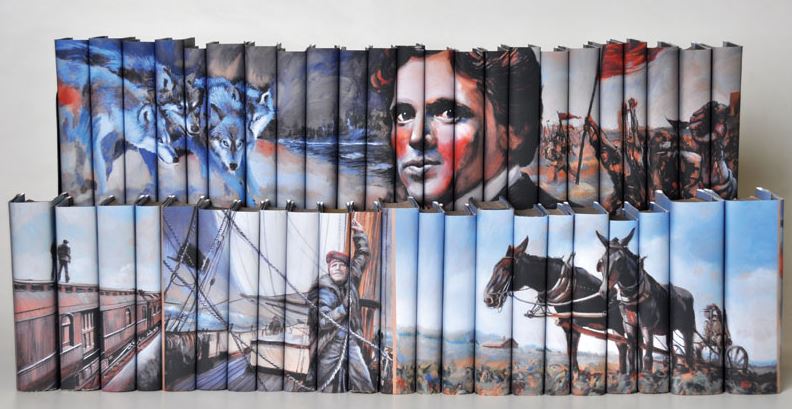
Dust jackets, that detachable outer sleeve that covers a new hardcover, have a history dating back to the 1800s. They were (are?) used to protect fancy book bindings before they reached their final destination. They were usually treated like gift wrapping… torn off and thrown in the trash (back then they didn’t recycle). And, well, you may still treat dust jackets that way. Who needs that extra paper hanging off a hardcover threatening to give you a nasty paper cut? Occasionally they’re shiny and pretty, and sometimes if the book is thin enough it can be used as a bookmark of sorts, but for the most part dust jackets are just for show. But one man, surprisingly, has capitalized on the dust jacket industry (apparently there’s a dust jacket industry). Thatcher Wine started Juniper Books in Boulder, Colorado in the early 2000s. The focus is the creation of unique libraries through the use of custom-designed dust jackets. They work with clients, commercial and private, to create unique book sets that they can feature in their library. In some cases they design …

A Great Find!

This is an edition of The House of Seven Gables from 1913, and Uncle Tom’s Cabin from 1853. The cover art on this edition of Nathaniel Hawthorne’s classic is beautifully simplistic. It’s kind of nice to see a cover design missing all the New York Times reviews and critical praise. It just goes to show, you never know what treasures your grandparents homes might house.

Bookshelf Inspiration

Do you have too many books and not enough shelf space? Yep, us too. Someday we’ll have that dream library where nothing but built-in shelves line the walls. But, until then a minimalist Ikea shelf will have to do the trick! In this case, all the colorful/fun books are arranged prettily on the available shelf space, and those less-attractive/beat-up/embarrassing paperbacks are hidden in boxes down in basement storage. It’s necessary when you’re a book lover with book hoarding tendencies. But no one ever has to know… shhhh.