Latest Posts

A little bit of nice…

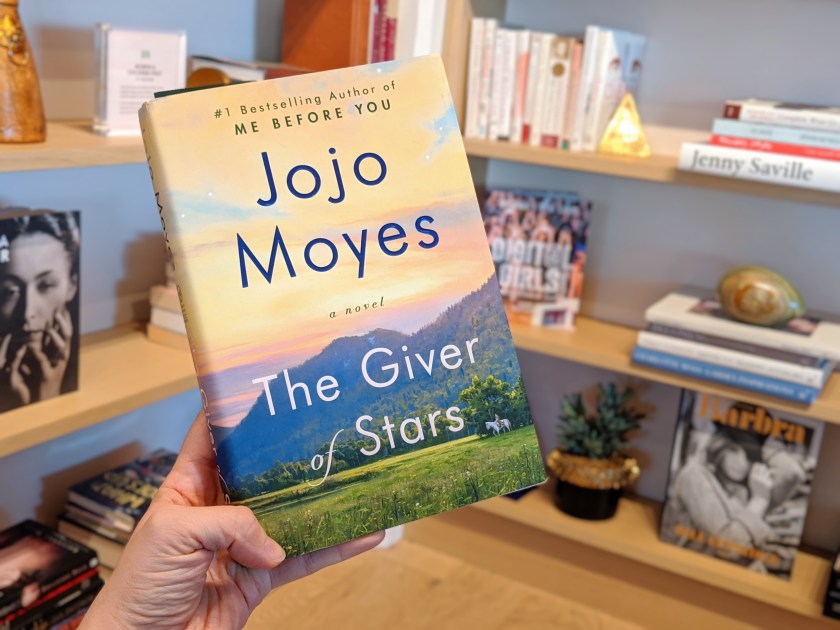
Full honesty here – after reading the synopsis of this book, I expected to not entirely enjoy this read. I’m not entirely sure why but just a gut thing. After reading it, here is what I can say – for what it is, the book is delightful. The hard and handsome landscape contrasts the somewhat airy and pretty story very nicely. The pace is excellent without sparing imagery, making it a hard one to put down. Plus, I really enjoyed learning a bit of badass women history. I mean, these women were freaking amazing.

The other side of the coin is that the story certainly lacks for some character complexity. Each person in the story, while serving a very distinct purpose, is either decidedly good or decidedly bad (or at the very least deeply flawed). No character is particularly challenging. Everything is made easy for you in the book – including Depression Era Kentucky, which is made to feel quaint.  I felt it a bit problematic that families living in abject poverty hoping for a part of an old magazine to be delivered to them felt romanticized.

These decisions in developing the characters and landscape as she did allowed Moyes to introduce a hell of a lot of humanity. Everything people did for one another in this book felt so nice because it was so nice.  And, honestly, it was nice to read. Even with a weird part were they broke out in song for some reason and a title that really has nothing to do with anything, I really did enjoy this one!

April Book

Spring is on it’s way! Thankfully, right? It’s been a long, dark winter and we’re really in the mood for something light and shiny. And April at The Bookly Club means we pick a book that can make us laugh and shed that winter mood.

This year we’ve chose Ali Wong’s Dear Girls as our comedy relief for April. Following her hysterical, runaway-hit of a standup special on Netflix (Baby Cobra) Wong released Dear Girls in October of 2019.


The book is written as a series of 14 letters (aka chapters) to her two daughters. From her perspective, it’s everything they’ll need to know in life. As the subtitle reads, “Intimate Tales, Untold Secrets & Advice for Living Your Best Life.” Chapters include, “How I Trapped Your Father,” “Tips on Giving Birth,” and “A Guide to Asian Restaurants.”

But fair warning: if you haven’t watched her stand-up you should. If for no other reason than to know what to expect with her humor and her raw, brutal, descriptive honesty about sex, relationships, womanhood, etc. She truly pulls no punches. As the back of her book reads…

Dear Girls,
You are prohibited from reading this book until you are twenty-one years old. I write about some truly embarrassing shit I did in my youth, and I don’t want you to use these stories against me when you are teenagers. Thanks for understanding—now put this damn book back on the shelf.

And how cute is this one under the dust jacket??

Want to read along with us? Here’s how…

  1. pick up a copy from where you get your books, and read along with us anytime between now and the end of April.
  2. keep us posted on social using #booklymark and tagging @thebooklyclub
  3. stay tuned for our discussion post on Instagram and our reviews here on the blog so we can chat all about it!

Happy reading!

March Book

In March, rounding out the year’s TV & film awards season, we read a book adapted for the screen. But first, we should mention that this awards season is discouraging. The lack of diversity hit a 3-year low. Usually I enjoy watching the Oscars, but watching the same characters award each other for another formulaic Tarantino or Scorsese film sounds like a snooze fest.

In contrast, we’re reading the New York Times Bestseller titled Just Mercy, by Bryan Stevenson. I first heard about this book during a fundraising event. The keynote speaker, a peer of Stevenson’s, spoke highly of his friend’s new book Just Mercy. I can’t recall his exact description of the book, but I do remember immediately adding it to my Goodreads. And that was four years ago, so it’s about time I read this one!

Stevenson is a brilliant and accomplished lawyer devoted to defending the disenfranchised, wrongfully convicted, and those trapped by a corrupt justice system. Just Mercy is the true story of Stevenson as a young attorney. It was early in his career when he founded the Equal Justice Initiative; an organization challenging racial and economic injustice and mass incarceration in protection of basic human rights. One of Stevenson’s first cases was Walter McMillian; a man sentenced to die for a murder he didn’t commit. Defending McMillian wrapped Stevenson up in layers of conspiracy and corruption that forever transformed his appreciation of mercy and justice. And that transformative knowledge and experience is bound in the pages of this book.

As of December 2019 the story of Just Mercy was released as a feature film adaptation starring Michael B. Jordan as Stevenson.

Both the book and movie seem fantastic. But like the true book lovers we are, we have to read the book first. And we hope you’ll read with us!

Here’s how…

  1. pick up a copy from where ever you get your books, and read along with us anytime between now and the end of March.
  2. keep us posted on social using #booklymark and tagging @thebooklyclub
  3. stay tuned for our discussion post on Instagram and our reviews here on the blog so we can chat all about it!

Food for Thought

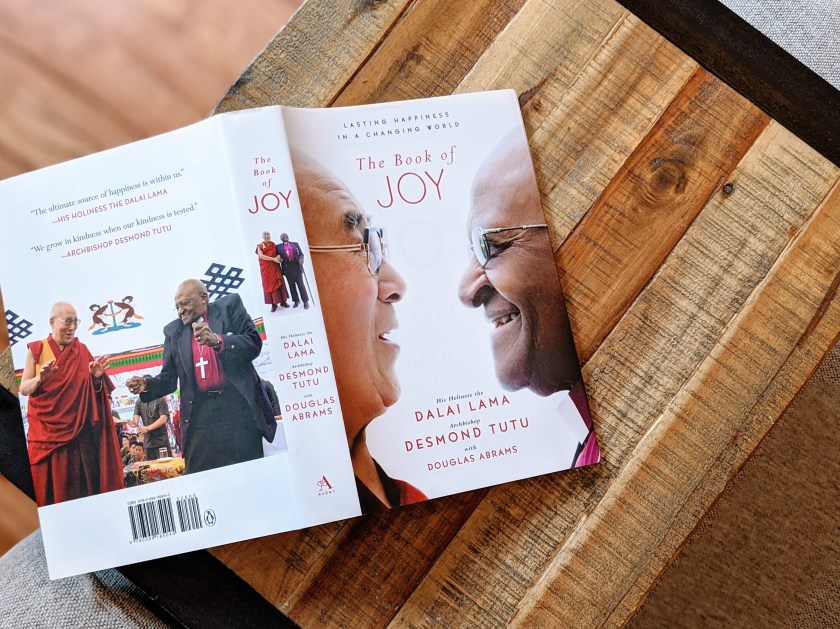
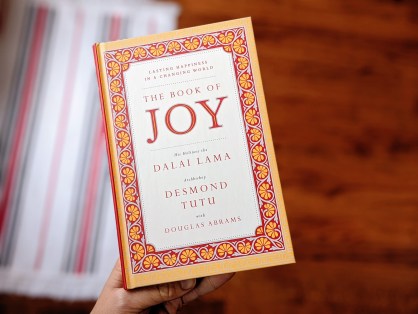
I feel like a broken record mentioning that The Book of Joy has been on my list for awhile, but one thing I really love about this bookclub is that we often read backlist titles (aka older books, not newly published titles). So yet again, I’m so glad to have checked another book off my long list of books to read. But on to the good stuff…

Besides feedback like, “this book is amazing!” I didn’t really know what to expect from The Book of Joy. Outside of having watched Seven Years in Tibet decades ago, and being able to put a face to the name Desmond Tutu, I could have told you very little about the book’s co-authors. And still this book surprised me in many ways.

First was its humor. The Book of Joy is the product of a week of conversations between Reverend Desmond Tutu and His Holiness the Dalai Lama around joy, and moderated by author and collaborator Douglas Abrams. Maybe I expected it to be a little dry and overly intellectual? But when the Reverend says to a cackling Dalai Lama, “Don’t laugh at your own jokes, man” I was laughing out loud. There was so much self-deprecation, laughter and joking between these two. And as Abrams points out, there’s such a tie between lightheartedness and holiness for these men. A repeated theme that I found very refreshing.

I felt like I could have highlighted nearly every sentence. This book was so much more than only a conversation about joy. Don’t underestimate it as a “how to get happy” kind of read. The Book of Joy felt like bearing witness to a historical event and a meditation on life’s biggest questions; how do we live a good life, why do we struggle, how do we forgive, how does perspective affect us, what’s the difference between curing and healing, what is joy and where does it lie (to name a few)? The Dalai Lama and Desmond Tutu provide their answers to these burning questions, and I’m here for it. Their struggles, years of contemplation, spirituality, curiosity, and the 170 years between them are more than enough to have me revisiting their words of wisdom on repeat.

The only criticism I have is I wish Abrams had given us a little more information on the Reverend and Dalai Lama’s histories. Over the course of the book you can slowly glean the information you need, but I would have liked an early chapter giving the reader a brief history on these two men.

But that being said, I loved it! This book could be easily consumed chapter by chapter if that’s what you’re looking for, or all in one sitting. And I know I’ll be picking it back up from time to time. There’s so much to consider and question that this book gives you enough food for thought for a lifetime. Or two lifetimes 🙂

February Book

We’re back to announce our official selection for February!
We’ll be reading The Giver of Stars by Jojo Moyes, and we hope you’ll read along with us! But more on that later…

Jojo Moyes, most notable for Me Before You (her tragic romance novel turned movie starring Emilia Clarke), recently published a historical fiction novel that’s getting a lot of attention. Including ours! Released in October of 2019, it was selected for Reese Witherspoon’s Hello Sunshine bookclub in November. And we can’t seem to open Instagram without seeing another book lover rave about it.

It’s based on the true story of a New Deal initiative backed by Eleanor Roosevelt called the Traveling Library. The Depression left much of America in poverty, but none were hit quite like the coal-mining counties of Kentucky. Without access to public libraries, and many illiterate, women were called upon to travel the counties and deliver books to those most in need. From 1935 to 1943 these women rode on horseback delivering books to homes and schoolhouses, earning names like packhorse librarians, book ladies, and paddle sack librarians. It proved to be immeasurably successful.

{To learn more listen to this podcast by The Kitchen Sisters}

The Giver of Stars follows a fictional member of the Packhorse Librarians of Kentucky; Alice Wright. Eager to escape English life, she marries American Bennett Van Cleve. Although their life in Kentucky doesn’t bring Wright the excitement she craves. At first.


“… a richly rewarding novel of women’s friendship, of true love, and of what happens when we reach beyond our grasp for the great beyond.”


When she hears of the need for women to join the Traveling Library, she jumps at the chance. Alice Wright quickly finds an ally in fellow librarian Margery; a uniquely independent woman. And they’re joined by three other determined women who set off on an unpredictable journey. We’re mood readers at The Bookly Club, and in February we like to read a love story of sorts. And although this might not be your typical romance, it seems to be a story about the love of books, love among friends, and the test of true love. Five unconventional women set out on an unconventional path and find love in many different forms. And we can’t wait to read all about it!

We hope we’ve done our job in convincing you to read along with us 🙂
Here’s how…

  • pick up a copy from where ever you get your books, and read along with us anytime between now and the end of February
  • keep us posted on any thoughts and/or progress you wanna share social using #booklymark and tagging @thebooklyclub
  • stay tuned for our discussion post on Instagram and our reviews here on the blog so we can chat all about it!

Happy reading, x

Happiness and Hope

I can safely say this is one of my leading favorites for any of our November selections. It’s a month when we pick a book that circles around family; the drama, the trials, the love, and everything in between. Behold the Dreamers by Imbolo Mbue was no different. A top book of 2017, Mbue’s debut novel, Oprah’s Book Club 2017 selection, and a New York Times bestseller. It’d been on my list since its debut, and I had high hopes!

It’s the story of the Jonga family, and their journey to a happy life. Jende Jonga moves to New York City from Cameroon to find a job, provide for his family, and dutifully walk the path to citizenship in the land of opportunity. The book begins when he gets a stable, well-paying job as a chauffeur for Mr. Clark; a top executive at Lehman Brothers. The catch? It’s 2007. You may think you’re witnessing an American dream about to come true, but it’s much more complicated.

The characters are powerfully written. I was deeply invested in each of their stories, and each of their dreams, no matter how divergent they were. Jende shoulders the pressures of his family’s future, life as an African immigrant, and his own dreams of becoming someone greater than he could have been in Cameroon. His wife Neni dreams of becoming a pharmacist, a life of possibilities for her children, and a home in America. But dreams, especially immigrant dreams during the great recession, can change course.

Each member of the Clark and Jonga families suffer through their own challenges. But they’re all forced to consider, in a very real way, what they’re willing to sacrifice to make their dreams come true. They’re faced with unfair questions like: is your dream right? Is it good? Is it worth it? Is it really yours? The paths they each take change them in different ways. And they find themselves asking, who have you become while chasing this dream? Is this who you want to be?


“Our people say no condition is permanent… Good times must come to an end, just like bad times, whether we want it to or not.”


With short chapters, great writing, rich and diverse characters, Behold the Dreamers was a delicious, moving, roller-coaster of a book. It was simultaneously heart-warming, tragic, frustrating, nightmarish and idealistic. The fates of each character had me hooked at the way through. Would these families find happiness? Would their dreams come true? Were those the same thing? I love when a book can be more than one thing. When it can tell a story that’s both desperate and hopeful. It doesn’t take sides. Mbue does a beautiful job showcasing how life and family are ever-changing and complicated. She shines in that gray area. And I LOVE when an author can leave you thinking that things weren’t all right or all wrong, they just are. (Our current immigration policies being the exception in my opinion).

Without giving anything away, this book didn’t end in a neat and tidy little bow. Things broke. Some dreams stayed out of reach. Some found the light. Some dreams changed. This book wasn’t a happily-ever-after kind of story. But much like the American dream, it gave you just enough of a taste of possibility to shed a light of hope over these family’s stories.

In conclusion, I loved this book! And you should go read it now 🙂

December & January Book

The Book of Joy: Lasting Happiness in a Changing World. Two spiritual giants; his Holiness the Dalai Lama, and Archbishop Desmond Tutu. Five days and one timeless question:

How do we find joy in the face of life’s inevitable suffering?

In April 2015 Archbishop Desmond Tutu traveled to the Dalai Lama’s home in India to celebrate his Holiness’s 80th birthday. In honor of this event, they wanted to create a gift they could share with the world. Over the course of a week, the Archbishop and the Dalai Lama were interviewed by co-writer Douglas Abrams to discuss what it is to live a joyful life.


“We are sharing what two friends, from very different worlds, have witnessed and learned in our long lives. We hope you will discover whether what is included here is true by applying it in your own life. Every day is a new opportunity to begin again. Every day is your birthday. May this book be a blessing for all sentient beings, and for all of God’s children—including you.”


Both men are Nobel Peace Prize recipients. Both have suffered years of exile and violent oppression. Tenzin Gyatso, the 14th Dalai Lama is the spiritual leader of the Tibetan people and has lived in exile in India since the 1959 uprising. Archbishop Desmond Tutu, the South African theologian, has been a devout anti-apartheid and human rights activist. Together these men have over 150 years of experience and wisdom and so much joy. This book is their way of sharing it with the world, and whatever they have to share, we’re here to listen.

December and January is always a good time for something new. A time to be better and grow in some way. And we like to do that with a book. So there you have it! This December and January we’re reading The Book of Joy to learn something new for a new year. And hopefully it spreads little joy this season. You should read with us and find a little joy this new year, too! How? Here’s all you need to know…

  1. pick up a copy and read along with us anytime before the end of January
  2. keep us posted on any thoughts or progress you wanna share social using #booklymark and tagging @thebooklyclub
  3. stay tuned for our discussion post on Instagram and our reviews here on the blog so we can chat all about it!

Happy reading! x

Rebecca meets Salem

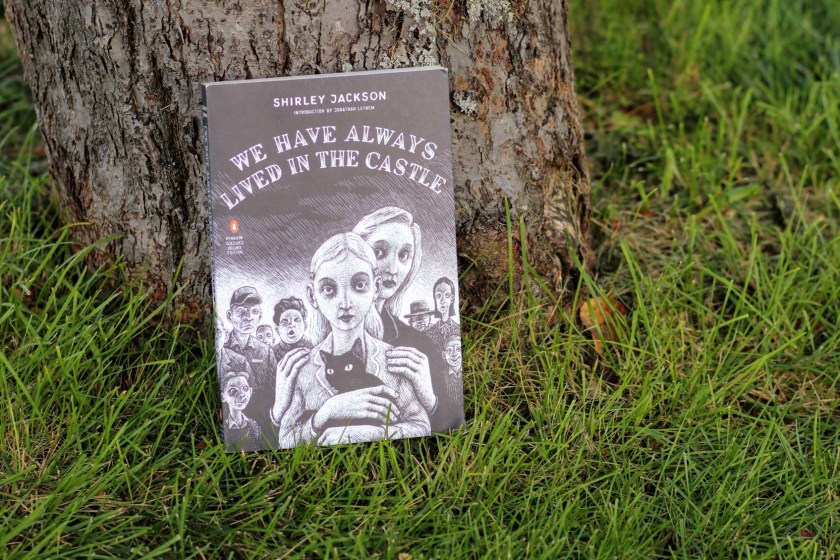
We first meet 18-year-old narrator Mary Katherine Blackwood during one of her biweekly walks through the local town that sits under the shadow of her family’s Manderley-esque estate where she, her older sister Constance, and frail Uncle Julian live. They are the only three living in the “castle.” Once members of a large family, they’re all that’s left after the others were murdered with arsenic during dinner. The sugar on the blackberries wasn’t sugar. Luckily Constance never takes sugar, and Mary Katherine (aka Merricat) was sent to her room without dinner. Uncle Julian only took a bit.

The sisters are odd to say the least. Sure, Constance was the lead suspect for having poisoned the family, but their dynamics are also quite unusual; and a little bit haunting. They live a life of routine and simplicity. Gardening, taking delicious meals together (always crafted by suspected murderess Constance), sending Merricat into town for food and library books, and taking diligent care of poor Uncle Julian. Uncle Julian is weak and without much memory. Although he spends most days recalling the event and working on his book of its chronicling. He acts as a constant reminder of what happened to the Blackwoods.

Constance is an agoraphobe, or so Merricat says. She never wanders further than her garden. And Uncle Julian can barely move from his room to the table. This leaves Merricat as the only connection to the outside world. She ventures into town on Tuesdays and Fridays for supplies. With every step she narrates her hatred for the residents and their hatred for her and her family. This mutual disgust is never quite explained. It seems a product of otherness, fear of the unknown, and the tension between the haves and the have nots. Although I couldn’t help but distrust Merricat from the very beginning. She was so angry. She spends much of her day checking the various trinkets she had buried around the property to keep out the unwanted out. Merricat, her trusty black cat Jonas, and the hatred of the New England townspeople definitely felt like a Salem witchcraft analogy.


“Merricat, said Constance, would you like a cup of tea?”
“Merricat, said Constance, would you like to go to sleep?”
“Oh, no, said Merricat, you’ll poison me.”


The charming existence the sisters and their uncle play at is disrupted when Cousin Charles arrives. A money-hungry “bastard.” He peruses Constance’s alliance but is cruel and disparaging toward Merricat and Uncle Julian. The orderly isolation of the Blackwood estate soon comes crashing down. In an epic way. I won’t give too much away, but after the climactic chaos Merricat finds a way to revert back to an altered state of their simple routines.

I didn’t find the Blackwood’s story scary necessarily. But it was disturbing. Merricat’s narration was suspicious. Constance and Uncle Julian seemed victims of Merricat’s manipulation. She kept them fearful and reveled in the oddities that kept them at a distance from everyone else. I read the events through a lens of an unreliable narrator and it made me question everything. Although Merricat describes their sisterly relationship as one of mutual love and understanding, it also felt like Merricat kept Constance trapped, afraid, and ultimately hidden away in the dark. The whole atmosphere felt claustrophobic and tense. But in a thrilling, well-written, atmospheric, page-turning way.

This was the first of Shirley Jackson’s books I’ve read, and I loved her writing! I’ll definitely be reading more of her work. There was so much to unpack. Themes of otherness, persecution, trust and fear, and the odd little characters like Jonas and the House cleverly weave in many layers of meaning. Although readable and quick, I still felt like there was so much to read into Jackson’s writing. It’s only 146 pages long, but full of metaphor, deeper themes, mystery, and complex characters. In a lot of ways I felt like We Have Always Lived in the Castle was reminiscent of Daphne du Maurier’s Rebecca, although shorter and set in a Salem-like town with Salem-like townspeople. I’d definitely recommend this one for fans of books like Rebecca, Flowers in the Attic, the Flavia de Luce series, or anything eerie set in New England. But I’d also just recommend this as a great fall read!

November Book

This November we’ve picked a family saga that’s been on our #tbr (to-be-read list) for quite awhile. Well, for about three years which is like a decade in book nerd years. Cameroon native Imbolo Mbue’s best-selling debut novel Behold the Dreamers was released in 2016. It won the coveted spot as Oprah’s Book Club selection for 2017. It won the 2017 Pen/Faulkner Award for Fiction, was named a New York Times Book Review notable book of the year, and was on numerous lists as one of the best books of 2017.

The high praise seems endless. And the story is still just as relevant and topical as it was three years ago. Set during the 2008 financial crisis, Mbue’s novel follows two disparate families; the Edwards family and the Jonga family. Clark Edwards is a senior executive at Lehman Brothers, he and his family live a life of wealth and privilege in New York City (with a home in the Hamptons on the side). Jende Jonga, his wife Neni, and their six-year-old son have come to the United States from Cameroon looking for a better life. Jende counts himself lucky when he gets a job as Clark Edward’s chauffeur. Jende’s wife Neni is even offered seasonal work at the Edward’s home in the Hamptons. But shortly thereafter Lehman brothers, and the global economy, collapses.


“Bright and captivating… illuminates the immigrant experience in America with the tenderhearted wisdom so lacking in our political discourse.”

The Washington Post


The Jonga family struggles to find home, freedom and stability in a new world. The Edwards family struggles behind the facade of privilege and financial crisis. Each of the four lives course through their own unique conflict, but ultimately the Jonga family finds themselves having to make a nearly impossible decision.

A story of immigration, family, and privilege could not be more timely. We’re looking forward to reading more about the paths these two families take. The book’s numerous accolades don’t hurt either. But we hope you’ll read with us! Want to know how?

  1. pick up a copy and read along with us anytime before the end of November
  2. keep us posted on any thoughts or progress you wanna share social using #booklymark and tagging @thebooklyclub
  3. stay tuned for our discussion post on Instagram and our reviews here on the blog so we can chat all about it!

Happy reading, x

Time Will Tell

My eight-grade English teacher recommended The Bell Jar to me. She thought I could challenge myself to take on extra reading. She allowed me pick whatever I wanted from the class library. And although I remembered little to nothing of the story, I remember liking it. It was the first book I’d read in school that clicked in a different way. Not that I had too much in common with Esther, but reading a book about a young woman, written by a young woman, made an impression. Outside of The Bell Jar school reading was all Mark Twain, JRR Tolkien, C.S. Lewis. But Sylvia Plath was different.

That English class added a lot to my love of reading. And in my adult life I’d always wanted to revisit The Bell Jar. Rereading it felt like recalling a vague memory, but through an entirely new lens. I’m 20 years older, I have two young daughters, I see a therapist, I’ve been married for 9 years, I’ve finished my education…  everything theme in this book was brighter this time around. Coming of age, motherhood, mental health, marriage, education. It was all made so much richer after time away. As it should, right?

I kept thinking about how Plath published this book when she was a young mother, just months before her death. I felt like I was reading her inner thoughts. So much of the story is a retelling of her own experiences. It’s likely because of this that the book feels like it holds a part of her soul. She writes so precisely about protagonist Esther’s “mental breakdown,” and her troubled path to recovery. The authenticity of her experience is on every page. In the end young Esther confesses that she fears when the bell jar might find her again. It seems it found Sylvia.


“Then I decided I would spend the summer writing a novel […] A feeling of tenderness filled my heart. My heroine would be myself, only in disguise. She would be called Elaine. Elaine. I counted the letters on my fingers. There were six letters in Esther, too. I seemed a lucky thing.”
— The Bell Jar, Sylvia (six letters) Plath


This was a slow read for me. It’s the opposite of a light page-turner and far from escapist. And I wouldn’t classify its reading as enjoyable. There were several moments when it showed its age, sometimes cringe-worthy. And it was painful to read about the disintegration of Esther’s sanity. It felt like Plath wrote her protagonists’s struggles from a place of both self-hatred and empathy. At times she wrote Esther as petulant, apathetic, hateful. And others she was hopeful, warm, intelligent. But she never really wrote her as entirely aware of her illness. I don’t think Plath was either. She calls it the bell jar because she’s without the words to fully describe what is happening to her. This was the saddest part of the book for me. It’s so telling of a time when mental health was illegitimate. Esther’s illness was without hope, without a clear diagnosis, and no way out. She was lost in a system of shame.

But after all that, I liked it. I really did! Her writing is poetic, funny, and deep. It’s a fascinating step back in time. I felt like I was truly bearing-witness to one woman’s experience. And taking into account the context of the author, her history, and her tragic end, makes the reading experience that much more impactful. I’m glad I gave this one a reread. And it will be interesting to see what I think when I read it again in 20 more years 🙂