Latest Posts

A Perfect October Read

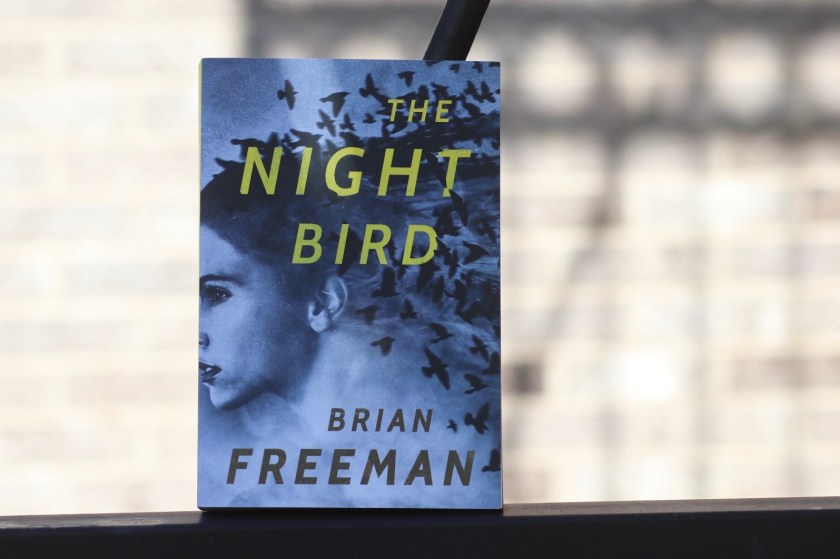
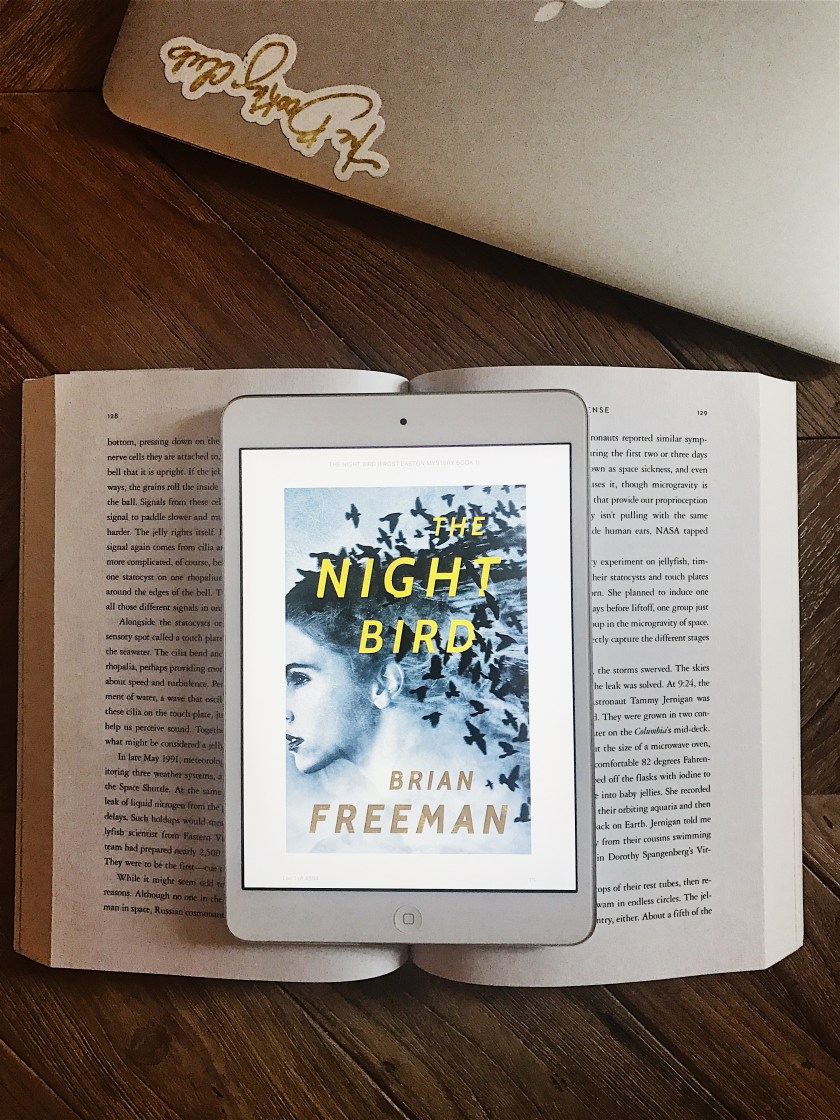
There’s something about fall that makes you want to read a book that gives you a bit of a chill, isn’t there? A good thriller or crime drama, something with a bit of suspense. Of course, that’s why our October theme is what it is, and why we chose The Night Bird.

I absolutely FLEW through this book – finished it almost as soon as we announced it as our October read. It was engaging, entertaining, and I was completely engrossed in the story. I know others have mentioned that the character development was perhaps a bit lacking, but I didn’t need it in this case (unusual, because that is usually the number one thing that makes or breaks a book for me). I enjoyed the story, and I enjoyed the way it unfolded. I loved that it kept me guessing, and that all these little clues sprinkled throughout the book gave you a chance to make some educated guesses.

On that note, I have something that is maybe a bit embarrassing to admit: I didn’t guess any of it. That is mostly do to the way I consume media. I really throw myself into it and enjoy it for what it is. I rarely TRY to figure out twists and unknowns. Maybe that’s why I’m so proud of myself when I actually do figure it out. What all of this means for The Night Bird is that I really found myself surprised at all the revelations, and it upped my enjoyment of the book tenfold.

Since finishing, I have recommended The Night Bird to several friends – one of whom is not such a fan of scary books. But here’s the great thing about it: the premise is believable enough to read as fiction rather than science fiction, but not so believable that it makes you afraid to sleep alone. Two thumbs up for Brian Freeman’s The Night Bird!
 

Detective Easton vs. Memory

The Night Bird grabbed me from the first scene. A girl who’s perfectly fine one second, and then crawling out of her skin the next, and discovering she’s not the only one this is happening to? I was hooked.

Psychological thrillers — heck, thrillers of any kind — can be hard for me to definitively rate. While they’re one of my favorite genres when I’m looking for a quick read, they either have me flying through the pages looking for answers, or they don’t. (Stephen King might be the exception, because man, he can WRITE. But I digress.)

The two things this book has going for it are the plot and characterization. I immediately liked Frost Easton. His character seemed warm, kind, sympathetic, and just quirky enough. (Shack might have been my favorite character of them all!) He made me feel that if anyone could solve this case, it was him. Through numerous plot twists and some gruesome scenes (reader beware), I was never bored. In fact, I barely put it down, finishing it in about 24 hours. Even the sense of place is well characterized — you feel as if you’re right there in San Francisco with Frost, Lucy, and Frankie.

The way it played with the idea of memory was intriguing and made me think more than most books of this genre do. Are we really able to manipulate memories, erasing and replacing them with new ones? And even if we can, should we?

The Night Bird had two of the main things I look for in thrillers: plenty of edge-of-your-seat moments and an ending I couldn’t figure out. Plus, it had just the creep factor I was craving for the first month of fall.

October Book

Happy Fall, everyone! As I write this the Midwest is sweating under 90 degree heat, even though leaves are starting to fall. Let’s hope while you’re reading this it’s more fall-like out there, and hopefully a more perfect setting for our spooky October book: The Night Bird by Brian Freeman.

A Chicago native, Brian Freeman worked in Marketing and Public Relations before becoming an author. He made his debut with the crime thriller Immoral in 2005. Since then he’s written over a dozen thrillers following the stories of different investigators; Jonathan Stride, Cab Bolton, and Frost Easton. And the first (so far only) of the Frost Easton series is The Night Bird. As Freeman describes it:

“Frost Easton is a Homicide Inspector in the dramatic locale of San Francisco. He’s young, with a sexy shock of swept-back brown hair, a neat beard, and laser-like blue eyes.  He’s unattached, except for his cat, Shack, who patrols the city with him. Think Justin Timberlake with a gun, and you’ve got Frost.”

It seems like a bit of a stretch. Too good to be true? We’re willing to find out.

In this, the first of the Easton series, he hunts a serial killer who preys on his victims’ suppressed memories and phobias. And as detective Easton follows his leads, psychiatrist Francesca Stein does her own digging, convinced that whomever is behind these elaborate murders is ultimately out to destroy her and what she’s worked for. A page-turning thriller with plenty of twists and turns is just what we’re in the mood for this fall!

We hope you’ll read along with us and share using #booklymark


The Perfect Diary

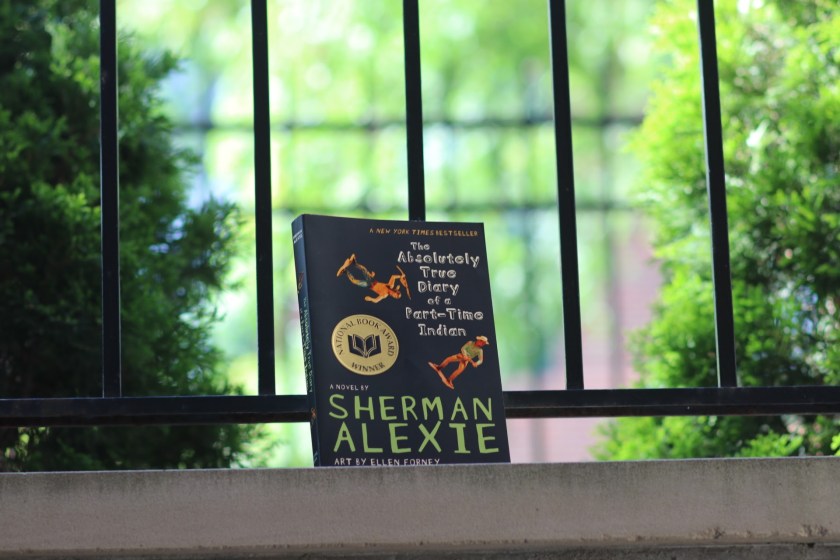
I read Sherman Alexie’s The Absolutely True Diary of a Part-Time Indian in three sittings and probably three hours. It is a FAST read. Fast enough that when I reached the end I thought I couldn’t possibly be finished. Not that the ending wasn’t satisfying, because it was. But there was something that felt incomplete to me. I liked how it ended, but I wanted more.

In fact, I felt that way about the book overall. I wanted a little something more than what I got. I frequently felt like I was missing something. Sometimes it was details that seemed to be eluding me. Sometimes it felt like I was making huge leaps in time without anything in between. At the end of the book I was pleased, but also felt like so many areas were left open. All the plot points weren’t tied up in a neat little bow.

And then….

And then I thought about the title again. The Absolutely True DIARY of a Part-Time Indian. And then I thought about who was writing this diary (a high school freshman boy). And then, I realized the brilliance of this book. My frustrations with the narrative, with seeming plot holes and lack of details, they exist because Alexie so perfectly wrote this novel from the perspective of Arnold/Junior.

So in the end, I really liked the book. Did I love it? No, but not because it wasn’t great. I think if I was in the target audience, I would’ve capital-L LOVED it. Instead, I just enjoyed it and plan on recommending it to everyone I know looking for books for their teenagers.

The Underdog

I really didn’t know what to expect with this book. As someone who judges books by their covers, I’ll say that the cover art set my expectations fairly low. But I was intrigued by the mixture of novel and illustrations. At exactly 230 pages I FLEW through this book. Between the pacing, illustrations, quick-read story, and short chapters, I think I read it in under 48 hours.

I loved Junior, the main character. He was the epitome of underdog. And his outlook on things, beautiful. Despite all the shit, he ended up hopeful. The luxury that it might be, it was nice to read a book for a change that left you feeling hopeful. Sometimes I feel like a lot of the fiction out there is the dark and scary type. And with the state of the world as it is I don’t feel like I need to spend all of my reading time further depressed.

I can’t say I’d recommend this book to my peers (30 somethings) as a must read…  it’s not tremendously relatable at this age. But given the right age I think it’s a great recommendation. I keep a “shelf” on my Goodreads of books I think my girls should read some day, and this is definitely one to add to the list. Despite some tough subject matter, I think the message is a good one. This is a book I would have really enjoyed as a younger adult. And Junior is too likeable to be missed. If you’re looking for a good read for this Junior High / High School age group, this is the one!

September Book

September marks a change in pace. New weather (so glad fall is almost here!), and a new school year. So we’re changing it up, too. This month we’ve picked something that’s been on many schools’ required reading lists (and taken off many) since it’s publication in 2007: The Absolute True Diary of a Part-Time Indian.

Written by Sherman Alexie and illustrated by Ellen Forney, this young adult novel follows the story of Arnold Spirit Jr., a unique protagonist. He’s a 14-year-old amateur cartoonist living on the Spokane Indian Reservation who goes by “Junior.” The story begins when he makes the controversial decision to venture off the reservation to go to an all-white high school in a border town. The son of two alcoholics, a victim of bullying, and the epitome of awkward; Junior’s story is endearing, brave, funny, and a coming of age story for the ages.

This is the first YA novel by Alexie, who’s had careers in stand-up comedy, screenwriting, film production, songwriting, and other fiction genres. The Absolute True Diary of a Part-Time Indian has won him critical acclaim and numerous awards. It’s also borne the brunt of a lot of controversies. Apparently some aren’t comfortable with the book’s depiction of violence, sexuality, race, addiction, bullying, and poverty. But let’s be honest, who can think of any academic required reading that hasn’t met with some controversy at some point. But we’ll just have to see (read) for ourselves.

We hope you’ll read along with us! Share using #booklymark


Real and Raw

Brit Bennett can certainly craft a story. I was sucked in to Oceanside almost immediately and then spent the next few days reading while tears pricked the back of my eyes. It wasn’t that the book was sad, per se, though elements of it were heartbreaking for sure. It was more that each person’s story felt so real and so raw.

I felt for Nadia, Aubrey, Robert, and Luke… even when they were making decisions that were frustrating or awful. I think the narrative voice Bennett used had a great deal to do with it. As a reader, I knew enough about the characters to understand their motivation, even when their literary counterparts couldn’t. {SPOILER ALERT} Even during Nadia and Luke’s affair, an act I generally have absolutely no sympathy for, I could see how it happened. While I wasn’t rooting for them, I wasn’t as angry with them either.

I also thought that having an abortion be the driving force of the story was an interesting choice. Mostly because as much as the book was about the abortion, it wasn’t about abortion. That was refreshing in a way because it didn’t read like a pro-choice or pro-life book, which I think would have taken this from a great summer read to something else (an election day read?!).

I could go on for hours about the intricacies of the plot, the development of the characters, the relationships the various narrative devices used, and my many thoughts on why you should read The Mothers. But I also know that sometimes short and sweet is better, which is incidentally another great quality of Bennett’s debut novel. So instead of going on for another dozen or so paragraphs, I’ll simply tell you this: the praise for The Mothers is well-deserved, and if you didn’t read with us this month, move it up your queue and read it ASAP.

Undecided Mothers

I read The Mothers on a beach vacation in Michigan. There was plenty of deck time overlooking the lake, very relaxing! And it was a good beach read… I think. I guess I’m still not sure of my final thoughts. I definitely looked forward to picking it back up each day, I was eager to see where the story went, and I was invested in the characters.

Bennett wrote very full characters and immersed you in their lives (Nadia, Luke and Aubrey). Sure, at times it was a little predictable, but I guess going into it you expect there to be a love triangle with some predictable conflict. And although not too much happens to these characters, Bennett’s writing style turns what seem like simple events into significant and meaningful turning points. I enjoyed her writing style, but I guess I didn’t like the story? Maybe that’s where I struggle.

The story circles around Nadia’s abortion at age 17 and the ripple effects. And I guess my question is; can you really write about the choice to terminate a pregnancy, its effects, and not take on the task of making a statement about abortion?

It felt like Bennett wasn’t trying to make any grand statements. Although abortion was the anchor in her storyline, it seemed written with an aversion to the pro-choice/pro-life argument. The opinions from Nadia’s family, the father of the child, her church community, The Mothers, are given freely. And they’re all disapproving. But I didn’t feel like Nadia, the one whose choice it was, ever gives her opinion. Yes, she makes the choice to terminate her pregnancy. Yes, she goes on to travel, study, and pursue dreams. But the character never explicitly (or implicitly in my opinion) states her feelings on her decision. And if you’re writing an entire story that centers on this one choice, it’s successes and in this case mostly failures, shouldn’t your protagonist at least express an opinion on the outcome? The most we get is, “No one made me do anything. I didn’t want a baby.” The absence of conviction from Nadia just made the book feel like one non-committal commentary on abortion. Although if we’re to take Bennett’s presumed statement from the verbose reactions of Nadia’s community the message is fairly negative considering all the disapproval and Nadia’s undefined achievements.


“… the difference: magic you wanted was a miracle,
magic you didn’t want was a haunting.”


There were also some missing links… what was Nadia’s mother’s story? Why did she end her life, and why didn’t Nadia care to know why? I wanted to know! What did Nadia ultimately do with her career? Did she find closure and fulfillment? And why the weird soldier wrench in Aubrey’s storyline? Was it just to put a slight dent in her girl-next-door armor?

Overall I loved the writing. I’d definitely read another Brit Bennett book. But the story frustrated me. I wanted more conviction, passion, purpose. One way or the other. It didn’t have to align with my views, but I felt like without giving the protagonist her resolution or voice on the matter, the book was missing the climax it was driving toward. But maybe that’s the point?


August Book

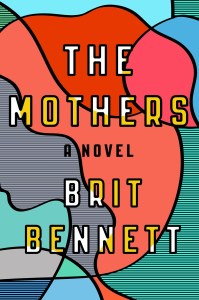
Image © npr.org 

August is a good time to enjoy the sun with a side of a good book, and maybe a cold drink, or two. So this month we’ve picked Brit Bennett’s The Mothers as our sunshine companion. The story is set in a contemporary black community of Southern California. It’s the story of love, ambition, community, and the secrets we keep. The protagonists—Nadia, Luke, and Aubrey—are young and living their lives. It is the last season of high school for Nadia Turner, a rebellious, grief-stricken, seventeen-year-old beauty mourning her own mother’s recent suicide. She takes up with the local pastor’s son, Luke Sheppard, and a pregnancy that results from this teen romance will have an impact that goes far beyond their youth. As Nadia hides her secret from everyone, including Aubrey, her God-fearing best friend, the years move quickly. Soon, Nadia, Luke, and Aubrey are adults and still living in debt to the choices they made. Caught in a love triangle they must carefully maneuver, they’re dogged by the constant, nagging question: What if they had chosen differently?

The Mothers asks whether a “what if” can be more powerful than an experience itself. If, as time passes, we must always live in servitude to the decisions of our younger selves, to the communities that have parented us, and to the decisions we make that shape our lives forever.

This is Bennett’s debut novel. Published in 2016, The Mothers was an instant bestseller. In fact, when she started writing it Bennett was the same age as the novel’s protagonist. And like the 17-year old protagonist, Bennett was a smart and ambitious African-American eager to get out of her hometown of Oceanside, California. The author’s education and writing took her to places she, and no one before in her family, had ever been. She spent a total of seven years writing this book, claiming in all that time she never got bored with it. And as a result, she’s written a critically-acclaimed, well-loved work of fiction that we’re very excited to read!

We hope you’ll read with us and share your thoughts using #booklymark… happy reading!

For more on Bennett and The Mothers check out this great NYT article.

A Voice

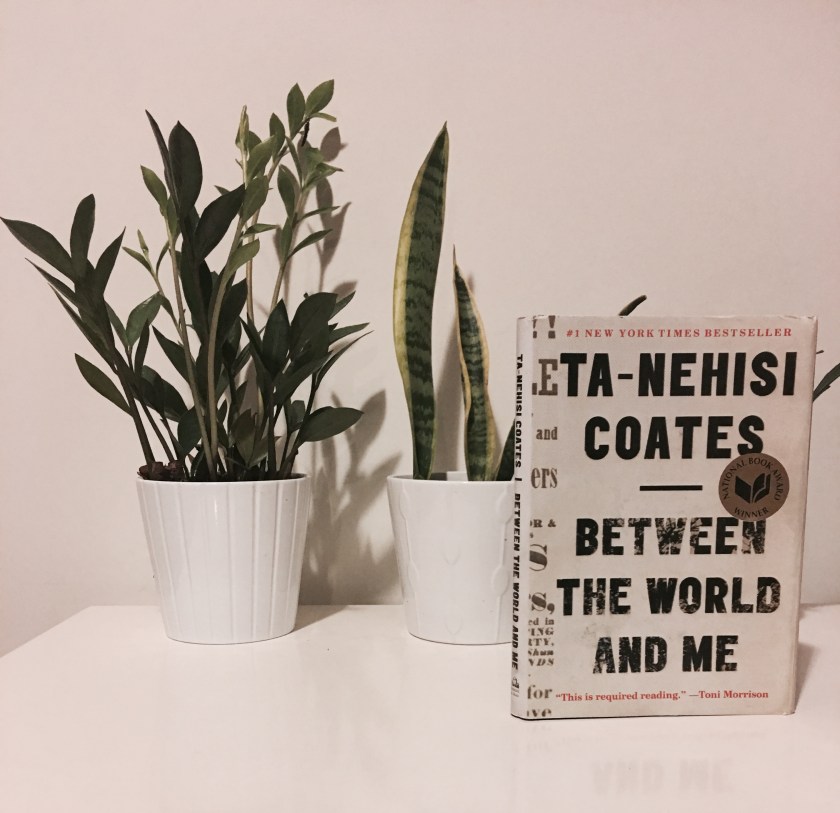
I struggled with this book. Not because the content scared me or made me uncomfortable. Not because it drew into question something I do not see or fail to acknowledge. But because what Coates tries to scratch the surface of is an extraordinarily complex network of invasive roots that both has strangled our collective culture and has consistently unearthed itself in a knotted fashion in places seemingly distanced from our country’s base. In a less metaphorical way, race is nearly always at the forefront of or a driving force of our societal (insert any word) – history, music, fashion, culture, vernacular. What is even more confusing is that we have created a narrative about race that in reality has so many dimensions and layers and colors but we have distilled it down into a simple dichotomy. What is black and what is white.


Coates is an astounding writer. He brings an eloquence, a voice, a personal experience that combined creates a feat of literature.  To improve our future, we must understand our past. That is the undertone of this book or at least the optimist’s interpretation of his work. But my only complaint would be that the book reads of Coates being keenly aware of how good a writer he is.  I know this sounds ridiculous. What I mean is that every sentence is worked.  The network of euphuisms, metaphors, and a solitary chapter format created this rhetorical netting that I sometimes got a little lost in – like I had just read a circular sentence. Many paragraphs can be anything but direct and should you not analyze every word and the construction of every sentence, you are bound to miss big parts of the book. To begin to unravel a complicated tapestry such as race and America, a little more directed language may be necessary. Based on my brief experience with his other writings, I doubt there is anyone else more suited for the job than Coates.


I would be interested to hear him speak. Perhaps someday I will get that opportunity some day.