Latest Posts

Crying and Smiling at the Same Time

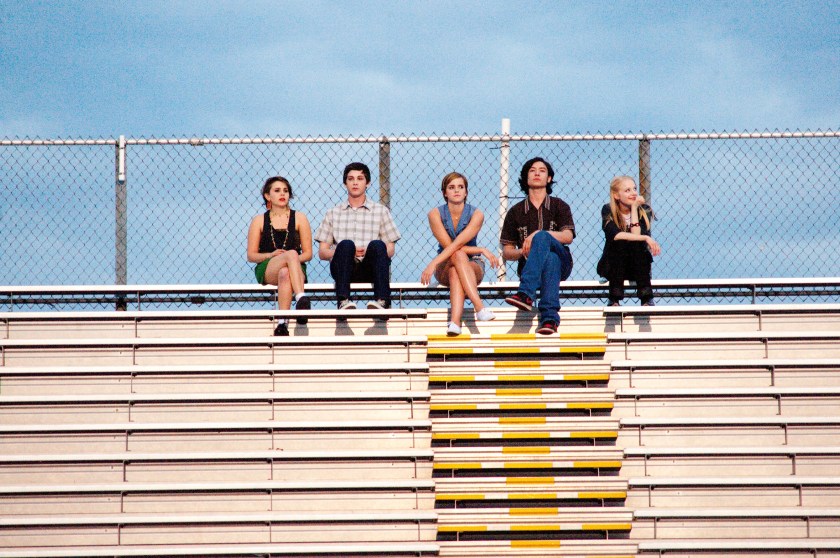
My journey with The Perks of Being a Wallflower is a long one. I first read the book when I was in high school, not long after it was released in 1999.I read it for the second time immediately after I finished the first reading. I remember as a teenager thinking that this book perfectly captured some of the struggles of high school. Even though Charlie and I had very little in common in terms of our experiences, I remember understanding his feelings of “outsiderness” and confusion. My next foray into Perks was in 2012 when the movie was released. I hadn’t read the book in over 12 years, and though I still counted it as one of my favorites, I had forgotten some of the details and so of course found myself a sobbing mess in the theater.

Now here I am, having completed my most recent reading of Chbosky’s first novel, and I am feeling all the same things I felt 16 years ago, plus even more. Reading it this time around, I found myself, as Bill suggested to Charlie, being a filter rather than a sponge. I was struck by how observant and thoughtful Charlie is, how he seemed to be so beyond his age, an “old soul” if you will. I realize that these are the qualities that are supposed to stand out about him, but I don’t know if in my previous readings I really GOT Charlie.

I think what struck me most was how he seemed to realize at such a young age that everyone has something they are dealing with. Some may be dealing with a more serious situation than others, but it doesn’t make anyone else’s problems disappear. Obviously, as I had read the book before and seen the movie, I knew what was coming with Aunt Helen, but in this latest reading, I found myself so angry when Charlie wrote to “friend” that he loved Aunt Helen for buying him two presents AFTER he remembered what she had done to him. I fumed and honestly almost put the book down. Then I started thinking about what he actually said. He loved Aunt Helen for what she did (buying him two presents) not necessarily for who she was. He could ignore the badness to appreciate something good she had done for him. Now, I don’t think I could EVER forgive what Aunt Helen did nor do I think she should be forgiven, but the concept – the idea that even people who have done terrible things are capable of good – is beautiful in a way.

I’ll end this the same way Charlie did. His final thoughts to Friend perfectly capture an ideal outlook for life. Life will be full of challenges, and have its ups and downs, but you have to always remember that even in the lowest, deepest down, there is always the potential for an up.


Please believe that things are good with me,

and even when they’re not,

they will be soon enough.


PS This is my first postpartum blog post, so please forgive me if it’s a little disjointed – my brain still feels a bit like scrambled eggs!


July Book

Images © ted.com

july copyWelcome, welcome! We’re glad you’re reading with us, or at least reading this post. Whether you’ve joined us in the past, followed our posts and reviews, browsed Bookly as a good distraction during the work day, or if this is your first time visiting… either way, welcome!

 

on the run coverWe’re glad you’re here. Especially this month. This July we’ve selected an important non-fiction read. Since in July we celebrate and reflect on our American history, we chose a story to teach us more about who we are as Americans… On the Run: Fugitive Life in an American City by Alice Goffman.

Goffman is an American sociologist who currently works as an assistant professor at The University of Wisconsin—Madison. Published in 2014, this book is Goffman’s ethnographic account of the six years she spent living in West Philadelphia (sorry, but you know where our head went with that. Just us?) observing the impact of mass incarceration and policing on low-income, urban, African-American communities. She started this research during her sophomore year at Penn and it eventually evolved into her doctoral thesis, and this book.

When it first debuted, On the Run was named by The New York Times as one of “100 notable books of 2014.” The New York Times Book Review also named it as an “Editor’s Choice” selection. And the book only gained popularity when Goffman’s TED Talk received over 1 million views.

However, her book has since been met with a series of controversies. First, there’s the issue of who is allowed to speak for whom. An understandable question addressed in a New York Times Magazine article this January:

“Above all, what frustrated her critics was the fact that she was a well-off, expensively educated white woman who wrote about the lives of poor black men without expending a lot of time or energy on what the field refers to as ‘‘positionality’’ — in this case, on an accounting of her own privilege.”

And then there are the inconsistency issues in her book. A few sources (Philadelphia Police and hospital administrators) are unable to confirm a few of her stories as they’re told in the book. But who do you trust in that situation? There are a few other oddities and inconsistencies as well. However, is the author to blame? Or does the fault lie with her field? This seems to be a common theme. As explained by Leon Neyfakh in a Slate article last June, “Goffman changed details and scrambled facts in order to prevent readers from deducing the identities of the people she was writing about. In the process, she made her book all but impossible to fact-check.”

Several thought-leaders have come to her defense placing blame on sociological formalities instead. Her current employer (University of Wisconsin – Madison), her publishers, and her thesis adviser have all stood in support of her and her book.

Either way it sounds like this book will be a learning experience. We’re excited to read Alice Goffman’s story. We hope you’ll join us!


“Forty years in, the tough on crime turn in American politics has spurred a prison boom of historic proportions that disproportionately affects Black communities. It has also torn at the lives of those on the outside. As arrest quotas and high tech surveillance criminalize entire blocks, a climate of fear and suspicion pervades daily life, not only for young men entangled in the legal system, but for their family members and working neighbors. Alice Goffman spent six years in one Philadelphia neighborhood, documenting the routine stops, searches, raids, and beatings that young men navigate as they come of age. In the course of her research, she became roommates with Mike and Chuck, two friends trying to make ends meet between low wage jobs and the drug trade. Like many in the neighborhood, Mike and Chuck were caught up in a cycle of court cases, probation sentences, and low level warrants, with no clear way out. We observe their girlfriends and mothers enduring raids and interrogations, “clean” residents struggling to go to school and work every day as the cops chase down neighbors in the streets, and others eking out a living by providing clean urine, fake documents, and off the books medical care. This fugitive world is the hidden counterpoint to mass incarceration, the grim underside of our nation’s social experiment in punishing Black men and their families. While recognizing the drug trade’s damage, On The Run reveals a justice system gone awry: it is an exemplary work of scholarship highlighting the failures of the War on Crime, and a compassionate chronicle of the families caught in the midst of it.”    

— On the Run back blurb


Don’t forget to share your thoughts with us by using #booklymark.

Have courage and be kind

I’m very glad that I finally crossed The Perks of Being a Wallflower off my list. I’d seen the movie years ago, which only made me more interested to read the book. And if you haven’t seen the movie yet you really should. I think it does a really, really great job with this story. And well cast, too.

I think this book is a new favorite of mine. The only thing about it that I might change would be to have read it at a younger age. It truly is a perfect young adult read. The story, the protagonist Charlie’s authentic, pure perspective on the fragile high school years, the perfect capture of those one-in-a-lifetime friendships, and the subtle telling of a larger more grievous story all made for a powerful read. And I loved the letter-writing style. It felt like Charlie was confiding in you. Of course this is an intentional literary tool, but admittedly it worked very well for Charlie’s story.

And who wouldn’t love Charlie? I mean, when he has thoughts like this you can’t help but love him (but I’m a mom, so I’m biased):

“I love my mom so much. I don’t care if that’s corny to say. I think on my next birthday, I’m going to get her a present. I think that should be the tradition. The kids get gifts from everybody, and he buys one present for his mom since she was there, too. I think that would be nice.”

Charlie is so vulnerable, kind and loyal. And yet he has these out-of-body moments of strength and anger. To me, that’s the battle young adults face as they experience the exponential passing of time. They’re vulnerabilities are constantly at odds with their strengths and frustrations as they naively rush into adulthood. And I love that this book captured that struggle in Charlie’s journey…

“I walked over to the hill where we used to go and sled. There were a lot of little kids there. I watched them flying. Doing jumps and having races. And I thought that all those little kids are going to grow up someday. And all of those little kids are going to do the things that we do. And they will all kiss someone someday. But for now, sledding is enough. I think it would be great if sledding were always enough, but it isn’t.”

There are so many moments in this book that so perfectly capture that realization. Time and age are inevitabilities. And that makes us angry. Right?

I think the greatest message this book send is that we all have our own story. Behind all public perceptions, everyone has a backstory hidden from view. Some better than others. Charlie, Charlie’s sister, Charlie’s aunt, Charlie’s friends Sam and Patrick all have their own stories of love and loss, mistakes and victories. And although this book sets out to peel back the layers of Charlie’s larger story, we unfold the stories of all the other people around him. And they all play a part in Charlie’s reality, which I love. We all matter. Our stories all matter. And consequently, we all matter to each other.

There’s no better time than now, considering what’s being said and done in our world today, to realize this and live by this truth. I wish the world were as kind and strong as Charlie. We’re not without flaws and damage, but as Charlie’s favorite teacher tells him, “Try to be a filter, not a sponge.” I guess to some people that might mean different things. But to me, this means filter out the good, instead of absorbing all the bad and ugliness of our world(s).

I think we should all aspire to be as kind and courageous as Charlie.

(bonus points if you know which other protagonist lives by courage and kindness…?)

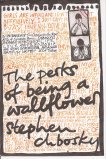
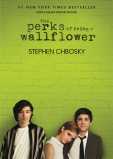
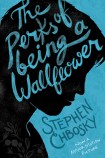
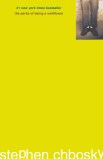
{The Perks of Being a Wallflower} Cover Redesign


Perks_YouthCover Perks_MovieCover Perks_Letter_Cover Wallflower book cover


The Perks of Being a Wallflower has a variety of covers to choose from. All of which I like. Even the “Major Motion Picture” cover is inviting (unlike most of its kind). But I liked the book so much I thought I’d do a redesign just for fun.

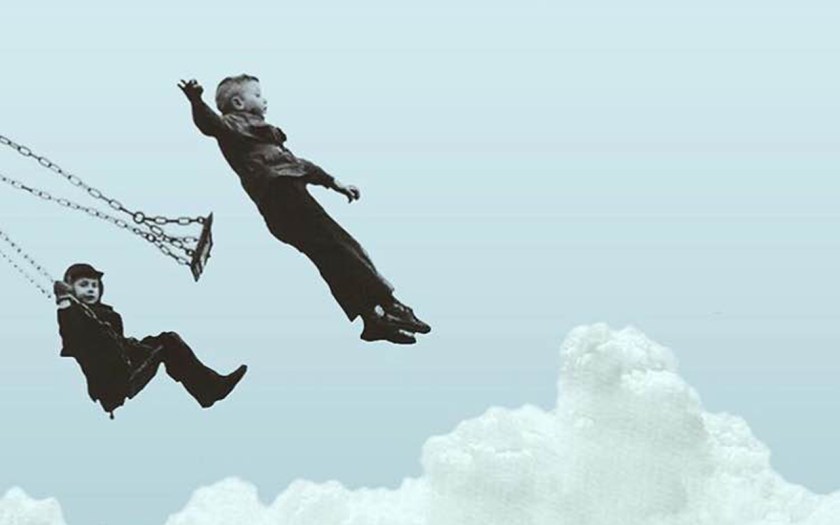
Most of my inspiration came from an artist I recently found on Instagram. His artwork is simple, powerful and beautiful. It can tell one million different stories in just one image. And I found one that I thought captured Charlie’s (The Perks protagonist) story pretty well, so it seemed a perfect selection for this redesign… a young boy flying from a childhood swing set.


Image Source: Fajar P. Domingo
Lettering: Katherine C.‘s handwriting
Typeface: Helvetica


May/June Book

Images © www.collider.com

May and June are two of our combo months (along with December and January). We read just one book for May & June. It makes it a good time to catch on some other things. And this month (these months) the theme is: School’s Out! MayJuneSo, drumroll please… dun dah dah dah!!! Ok. That’s enough. For May & June we’ll be reading The Perks of Being a Wallflower. It’s a modern young-adult classic. Or at least that’s what we’ve heard. It’s one of those books that’s always on our TBR (to be read) lists, but somehow we’ve gone years without picking it up. And, maybe, watching the movie instead. Ahem. Well, enough procrastinating. It’s time to officially give this one a go. You in??
Well, you should be. And if the movie trailer doesn’t grab you (trust us, the story is about a lot more than it seems), here are a few more fun facts…


Wallflower book coverThe Perks of Being a Wallflower
was written by Stephen Chbosky and first published in 1999. Chbosky is a native of Pittsburg, as is our protagonist Charlie. But more on that later. Chbosky graduated from USC’s filmic writing program and wrote the screenplay for the film adaptation of RENT. He even wrote and directed the feature film adaptation of this book! That’s a pretty impressive resume. It took him 5 years to develop and publish The Perks of Being a Wallflower, which has been banned in some American schools due to controversial content and met with some mixed reviews from critics. But most landmark books are, right? And with the premier and success of the 2012 film version the book reached the New York Times Bestseller list.

Set in the early 1990’s, this book tells the story of Charlie, who narrates through a series of letters to an anonymous recipient (us maybe?) as he treks through his freshman year of high school. The book’s powerful representation of a niche time in life has gained the book (and film) a cult following and made it a match for some required reading lists (that is, wherever it’s not banned). Hence, Bookly making it our choice for the May & June YA book!

Ok, now, are you in?! Good.

And one more thing, here’s a fun playlist to listen to while enjoying our May & June read…

Happy reading.

Great, Just Not for Me…

I’m sure the title of this post made you say “WHAT?!” And I don’t blame you. Let me start by saying I’m the wrong person to review this book. Why? I’m not a short story person. I enjoy the occasional short horror story and I have a slightly higher tolerance for personal essays or memoir-based short stories a la David Sedaris. But fictional short stories are just not my jam, and they honestly never have been. Generally, when I see those words on the cover of a book, the book goes back on the shelf. I give you this information so you understand my biases before you read any further.

Let me start with the positive. This is a smart read. I was consistently and repeatedly impressed with how intelligently written all of B.J. Novak’s stories were. They are all based in that intellectual, thought-provoking humor that manages to still be just a little silly and a little absurd. I really enjoyed it. It’s also an incredibly fast read. I have a Kindle, and after reading for an hour I realized I was more than a quarter finished. I appreciate a fast read. Lastly, and this is a bit redundant of my first point, it is just good. B.J. Novak is a great writer and this is a great book, full of great lines. I think my favorite is the closer from the story about walking on the moon: “That’s honestly all I can come up with, pro-moon wise. To each his own, I suppose.”

The negative? As it turns out, even when they’re as objectively good as the ones in this book, I’m just not that into short stories. But if you are, and really, even if you aren’t, you should read One More Thing.

Oh, and one more thing (pun intended). You should check out The Book With No Pictures (his children’s book) while you’re at it. It’s a delight.

Great Reads

After the rollercoaster that was Betrayal, One More Thing was just the book I needed. I guess you could say it restored my faith in the good. It was short, sweet, and, let’s be honest, you could just skip whichever stories you weren’t in the mood for.

The stories range from one sentence, at most, 20 pages. Each story is a nice little package with interest all its own.  So it was easy to hop from story to story, making it a very fast read. Granted I read most of it on a plane, but I finished it in only a day and a half.

I’d definitely recommend this as an entertaining, thought-provoking, laugh-out-loud book for anyone and everyone. I think my favorite part was how a few of the stories connected to each other (the ambulance driver and the girl who gives the best advice, and the missed connections red shirt post). Of course I had my favorites, and my not-so-favorites:

Love it :

  • Missed Connection: Grocery spill at 21st and 6th 2:30pm on Wednesday
    The longest missed connection post you’ll ever read, but with a smile-worthy ending.
  • Sophia*
    A realistic, original answer to the question; what happens when artificial intelligence becomes capable of love?
  • The Man Who Invented the Calendar
    I laughed out loud reading this one. Like when he says “Another small fuck-up: I put an extra ‘r’ in all the copies I handed out of the calendar, so it said ‘FebRuary,’even though I already told everyone the next month coming was called ‘FebUary.’ I felt so stupid.”
  • One of These Days, We Have to Do Something About Willie
    What happens to your college friends after college? People don’t always end up how you predicted, for better and for worse.
  • Never Fall in Love
    “I broke the one and only rule you told me,” she said. “Never fall in love. I fell in love.”
    “Oh, honey,” he laughed. “That’s not a real rule! I just know you’d never find love if you were looking for it.”

Leave it :

  • Comedy Central Roast of Nelson Mandela
  • Quantum Nonlocality and the Death of Elvis Presley
  • If I Had a Nickel
  • Just An Idea


* “You meet a finite number of people in your life. It feels to you like it’s infinite, but it’s not. I think it’s the biggest thing I can see that you can’t. Because your brain doesn’t work the way mine works, with all these calculations and everything. You think you meet an infinite number of taxi drivers, but you don’t, it’s probably not even a thousand, in your whole life. Or doctors or nurses—do you get what I’m trying to say? … There’s always going to be one more thing. Because that’s what infinite feels like. And the difference between love and everything else is that it’s infinite, it’s built out of something infinite, or it feels like it is, anyway, which is the same thing to us. Or to you, and to simulations like me—I know what I am. But you can’t see it, because to you everything is infinite. You think a million billion more things will come your way, a million billion more of everything. But no, everything that actually causes that infinite feeling, the circumstances of ever infinite feeling is so, so finite.”


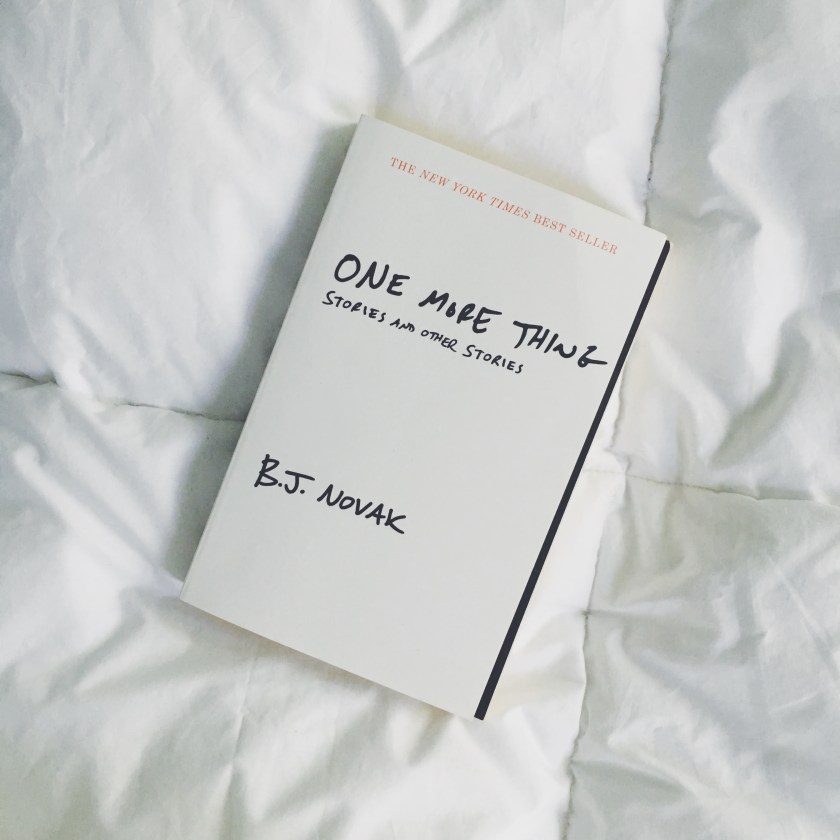
One More Thing: Stories and Other Stories by B.J. Novak

Quick, Quirky, and Quiet

As someone who didn’t watch “The Office” (I know, shame on me), I wasn’t sure what to expect from this book, I just wanted it to be funny. And it was! I found myself chuckling out loud a couple of times, causing my husband to inquire about what I was reading (and then adding it to his own TBR pile).

Full of humor and insight on the absurdity of life, these stories vary in length and subject. Most are relatively short, making this a super quick read that I was able to finish in under 24 hours.

A couple of my favorite stories: when an elderly man makes it to heaven and can’t wait to reunite with his grandmother… and her reaction isn’t what he expects; when a Frosted Flakes-prize winner sets out to claim his winnings only to uncover a big secret; and a man who wears a red t-shirt every day in hopes of finding female companions.

A collection of stories that find humor in both the ordinary and the extreme, they also quietly comment on the sadness of life in a way that leaves you thinking… and laughing.

A Spotlight on Betrayal

I’m fessing up: I didn’t read Betrayal. Mainly because I saw “Spotlight” and was afraid reading the book would be redundant. As it turns out, after talking with some of the other Bookly Clubbers, I might need to keep it on my TBR list. But in lieu of a book review, I’m here to give you my thoughts on the movie, which I was thrilled to see win Best Picture at the Oscars this year.

Saying I enjoyed this movie sounds a bit strange since it’s such a disturbing story, but you know what I mean. So let’s get to what I liked/didn’t like, bullet point style.

  • As much as I LOVE Rachel McAdams (and I really really like her), I thought her performance was a bit meh. She has a tendency to play characters that don’t seem to push her far beyond just playing Rachel McAdams. But still, I’ll see [almost] any move with her in it. (Note: DO NOT see “Aloha.”)
  • Mark Ruffalo was GREAT. I thought he played the character well, and made Michael’s neuroses relatable and endearing. (Not sure if that aspect of his character was true to life or not.)
  • While I normally get frustrated at movies that are 2+ hours, this was just a FEW minutes over and didn’t feel that long. The pace was good, despite the fact that there weren’t big revelations or dramatic moments until the very end.
  • The Grandma at the end? That’s when the tears started. Until that point I think I’d been holding my breath.
  • The last few screens listing the number of affected children in each city was, for me, the most poignant and effective part of the entire two hours and nine minutes. Both my husband and I left the theaters in stunned silence with tears in our eyes.

Needless to say, I loved this movie. Everything from the acting to the pacing to the last few minutes left an impact. If you haven’t seen it, what are you waiting for?

April Book

Images ©Knopf Doubleday

In the mood for a good laugh after last month’s read? Phew! Us too. So, in honor of April (the month of foolish pranks) we’re reading One More Thing: Stories and Other Stories by B.J. Novak; “the wonderfully cockeyed, consistently hilarious debut.” You probably recognize the name B.J. Novak. He’s a writer and actor widely known for his work on the acclaimed comedy series “The Office” as an actor, writer, and executive producer. Now, Novak is expanding his scope beyond the walls of Dunder Mifflin. In One More Thing he takes on a range of human experience in this quirky new story collection.


“Finding inspiration in questions from the nature of perfection to the icing on carrot cake, One More Thing has at its heart the most human of phenomena: love, fear, hope, ambition, and the inner stirring for the one elusive element just that might make a person complete.”


Published in 2014, Novak’s One More Thing joins a growing list of celebrated books published by comedic actors/writers (Amy Poehler, Mindy Kaling, Tina Fey, etc.). Although unlike others who have written autobiographical humor, Novak’s book is a series of fictional short stories born from his creative imagination. Just a few of the short stories include: a boy wins a $100,000 prize in a box of Frosted Flakes—only to discover that claiming the winnings might unravel his family; a woman sets out to seduce motivational speaker Tony Robbins—turning for help to the famed motivator himself; a new arrival in Heaven, overwhelmed with options, procrastinates over a long-ago promise to visit his grandmother.

We can’t wait to dig into this one, and we hope you’ll join us! Here’s a preview of what’s to come:

Also…
New York Times Sunday Book Review of One More Thing
NPR’s exclusive first read of One More Thing
Washington Post 
review of One More Thing

And in case you’ve already read this month’s book, here are some other good humor book recommendations:

51O5o-cFKQL16181775


And one more thing, here’s a fun playlist to listen to while enjoying our April read…