Latest Posts

30 Years in 30 Books

{Image © ELLE Magazine}

Of all the magazines cluttering newsstands—all fighting not to get lost in the declining world of print—Elle Magazine is a stand out. Among the options with pretty actress/model cover girls, Elle also offers substance. It’s the only magazine where you can find both an article on the 10 best facial exfoliants AND one father’s brilliant financial solution to the future wage gap faced by his boy/girl twins.

We also happen to love Elle because they always give their fair share of attention to books. For example, in the latest September issue they present The Lit List… “There are certain books that change the conversation and the way we see the world. The editors of ELLE dug deep and picked the 30 from the last 30 years that every self-respecting reader should have on her shelf.”

It’s definitely a list to take a look at! Here are a few of our favorites from the 30…


1986 The Handmaid’s Tale
1992 The Shipping News

1996 Into the Wild

2000 The Tipping Point

2006 Eat, Pray Love

2012 Gone Girl


For more great book updates from ELLE visit Elle.com 

October Book

Image © Beck’s Books

Happy Fall everyone! It’s the perfect time of year to curl up with a hot beverage and haunting book. So, for this month’s selection we’ve gone with the theme: {Ghost Stories}.


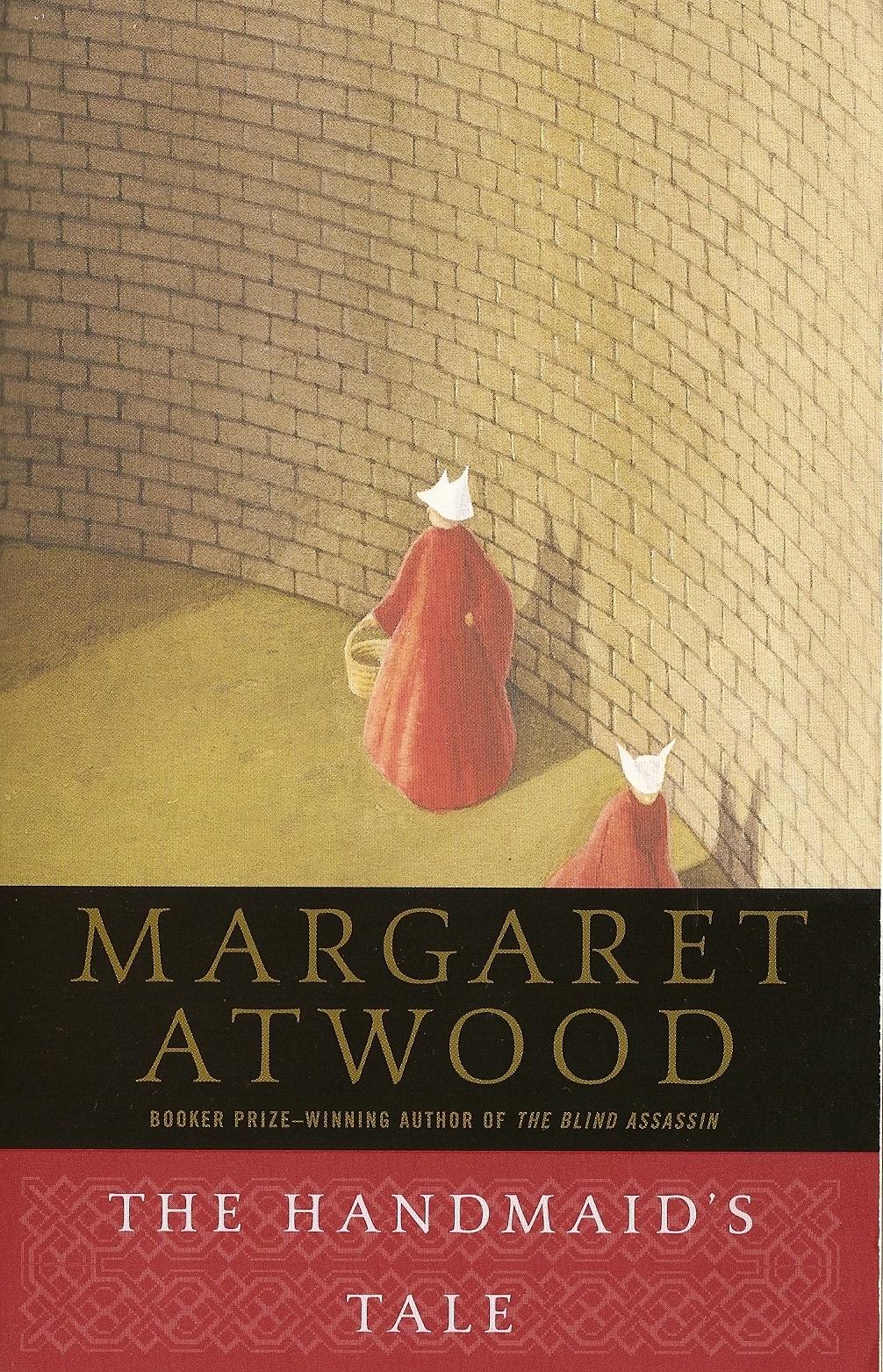
We had a long list to choose from… but there was one classic that made its way to the top: The Handmaid’s Tale by Margaret Atwood. Surprisingly, none of us have read this highly acclaimed novel, named on such Goodreads lists as: Best Books Ever and The Most Disturbing Books Ever Written.

atwood1Published in 1986 by award-winning, Canadian author Margaret Atwood, this is the story of a dystopian United States set in the near future when a totalitarian Christian theocracy has overthrown the government. In this disturbing world people are segregated by categories and made to dress according to their station. The bodies of those who rebel swing from the walls that surround the new world. This new world is a haunting look at humanity’s capacity to impose a social control so disturbing, so all-consuming, that the citizens wander as ghosts of their former selves.

Some might categorize this as science fiction, but Atwood insists none of her books are sci-fi. “In her recent, brilliant essay collection, Moving Targets, she says that everything that happens in her novels is possible and may even have already happened, so they can’t be science fiction, which is ‘fiction in which things happen that are not possible today.‘” It’s this very idea that makes this such a scary story. There might not be ghosts or haunted houses… but a world like this seems an even more frightening reality.

We hope you’ll read along with us and share your progress/thoughts with us on Instagram or Twitter using #BooklyMark!


{Their Eyes Were Watching God} Cover Redesign

In the years since this book was published, there have been quite a few iterations of the cover design. None of which have been terrible, but I figured it’d be a fun redesign none-the-less.

their-eyes-were-watching-god-cover-imagetheir_eyes_were_watching_godhurston_covertheireyeswatchinggod_pb_c46623

This design was inspired by the reoccurring theme of the pear tree (among others). Early on in the story the young protagonist, Janie, sits beneath a pear tree and ponders life and love. All in one, the tree symbolizes her memories, hopes, and the blossoming of her dreams. And then throughout the story Hurston uses the pear tree, and others, as symbols of Janie’s life… “Janie saw her life like a a great tree.” So, here it is…


TEWWG_BookCover


Title Font: Hitalica
Caption Font: Georgia
Pear Illustration: “The Beurre Diel Pear” Augusta Innes Withers, Hand-colored Engraving


…Were Watching Love

I enjoyed this book a lot more than I thought I would. Although the vernacular was hard to read through at times (just slowed things down a bit), I thought the pacing was well done (her use of time pulls you through the story… 25+ years in less than 200 pages) and her writing style was captivating.

After reading the last page, I went back and read the first two paragraphs:

“Ships at a distance have every man’s wish on board. For some they come in with the tide. For others they sail forever on the horizon, never out of sight, never landing until the Watcher turns his eyes away in resignation, his dreams mocked to death by the Time. That is the life of men.

Now, women forget all those things they don’t want to remember, and remember everything they don’t want to forget. The dream is the truth. Then they act and do things accordingly.”

Rereading this intro gave the book a clarity for me. It’s as though Hurston puts the thesis of protagonist Janie’s journey right there in front of you before you ever being. This was a story of a woman—pure and honest—surviving in the world of men and weighted down by their false ambitions.

This woman, Janie, traveled a path from child bride (16years old. Yeah it was a different time, but gross) to reluctant, widowed, cougar (a 40 something married to a 25 year old), and through a multitude of chaos in between (her crazy hurricane story seemed to foreshadow Katrina). The story relies heavily on the themes of gender and race. But Hurston weaves Janie’s story so seamlessly that, in my mind, it blurs the lines between race and gender issues… they became one in the same. The injustices brought towards Janie weren’t just issues of racism or sexism, they were both. Simply by existing as a black woman those identities are unbreakably linked, and the story Hurston tells (somewhat her own as a black woman white America) is a beautiful and rare look into a unique experience of a specific time and place.

Also the theme of the Watcher carries on through the book. In the title and and throughout the novel it seems to reference the relationship her peers have to God, death and “white folks.” They are always watching. Waiting. Questioning. Their journey is one of seeking something higher, better and more meaningful. But Hurston illustrates, through the telling Janie’s story, that the truth we should all be seeking is love. Not necessarily God, not death, never the “white folks,” but true and mutual love. I don’t think Janie ever find this. She thinks she does in Tea Cake, but it’s a conditional love. Although, like she says…

“… love ain’t somethin’ lak uh grindstone dat’s de same thing everywhere and do de same thing tuh everything it touch. Love is lak de sea. It’s uh movin’ thing, but still and all, takes its shape from de shore it meets, and it’s different with every shore.”


All the Parts

Their Eyes Were Watching God was a profoundly communicative summation of parts that created a rhythmic narrative of the many lives of Janie.  Janie, herself, is certainly a workhorse character embodying many lives. Each of her lives served a distinct purpose to describe the struggles of mankind (man or woman, black or white) – the struggles of balancing the innate desire to stand alone, free, and independent with the crushing need for love and the struggles of defining community and oneself within community. Zora Neale Hurston created Janie as a heroine for the African American woman. While their eyes were watching God, Janie’s were strictly focused on determining her own path.

As complicated as the many lives of Janie were the decidedly varied narrative techniques. Oscillating between vernacular speech and highly rhetorical narration, Zora Neale Hurston’s diverse writing style helps define Janie’s loves and lives.  Janie moves from a stifled relationship with Jody wherein she does not speak rather is spoken for to her verbose, solid relationship with Tea Cake.  The intercut use of Southern black colloquial dialogue provides an authentic voice to the book.

Clearly this is a book and an author that were ahead of their time but continues to resonate today. While the book does fall pray to some clichés (independent woman whose seasons are defined by her relationships with men (snooze)), overall it does more to uplift racial stereotypes by presenting rounded characters who are faulted as we are all faulted, who have desires as we all have desires, and are evolving as we all evolve.  In that sense, it is a global story.

Print Books for the Win!

The argument goes on and on, and on… e-book vs. print book, which will come out on top? Well, it seems the easiest answer is: to each their own. But according to the New York Times the competition has taken an unexpected turn.

As they say in a recent article The Plot Twist, “… the digital apocalypse never arrived, or at least not on schedule. While analysts once predicted that e-books would overtake print by 2015, digital sales have instead slowed sharply.”

Readers are becoming hybrids, purchasing both print books and e-books. And this is creating a resurgence of brick-and-mortar bookstores and more competition for Amazon and e-readers. It’s probably too soon to tell, but print books are putting up a bigger fight than most predicted (not us, we knew books weren’t going anywhere).

So only time will tell, but our prediction is that the unique charm and magic of hardcovers and paperbacks will keep them around for future generations (it’s not like you can read a children’s book to a 2-year-old on a kindle or iPad).

READ MORE


Happy Force Friday!

No idea what we’re talking about? Let us explain: Force Friday is “the highly-anticipated midnight release of Star Wars: The Force Awakens toys, collectibles, gadgets, and more — is almost here. It will be the world’s first chance to own official product celebrating the next installment of the Star Wars saga.'”

Technically it’s a made-up nerd holiday. But exciting nonetheless!

We think it’s safe to assume you’ve heard (one, twice, or dozens of times) that the new Star Wars movie is coming out this December… Star Wars: The Force Awakens?

(Don’t worry, we’re getting to how this relates to books)

Since this new movie takes place a few decades after Star Wars: Return of the Jedi (the one with the Ewoks) there’s a large gap in time to fill. So, books to the rescue! Force Friday also marks the launch of the new novel Star Wars: aftermath_new.6.red_Aftermath. It’s a new Star Wars book that takes place in the many years between Return of the Jedi and The Force Awakens. So after the good guys win (and the Ewoks have their dance party), this book follows their journey in the ‘aftermath’ of the rebels victory. And all the favorites make an appearance (Han Solo and Chewbacca included).

So, if you have a Star Wars fan in your life (as some of us Bookly authors do), they might be interested in this new release so they can brush up on all the galaxy events before December arrives.

Click here for Entertainment Weekly’s latest interview with Author Chuck Wendig. And may the force be with you!

September Book

American Broadcasting Company © 2005 “Their Eyes Were Watching God” TV Movie

Okay folks, Summer has come to a close and school’s back in session (or soon to be). But have no fear, that means fall is on its way! Maybe you all don’t feel the same way, but we look forward to this colorful season of cooler weather, layers, and school supplies (is our inner nerd showing?). So for this month’s book choice we’ve gone with the theme: {Back to School}.


There are so many great options to choose from, but we’ve decided to go with Their Eyes Were Watching God by Zora Neale Hurston (1891-1960). Set in Florida in the early 20th century, the their_eyes_were_watching_godstory follows Janie Crawford on an extended flashback as she tells her story in three parts from her grandmother’s plantation shack to the Everglades—until a tragedy brings her home. Janie narrates her life story to her best friend, satisfying the “oldest human longing—self-revelation.”

Maybe a lesser known option, but the more we learn about this book the more excited we are to dive in! Here are a few important need-to-knows…

  • TIME included the novel in its 2005 list of the 100 best English-language novels published since 1923
  • Hurston wrote this novel in just 7 weeks (!?!) while on a Guggenheim Fellowship in Haiti
  • Published in 1937
  • On the reading list for some high school or college classes
  • Their Eyes Were Watching God belongs in the same category with the works of William Faulkner, F. Scott Fitzgerald, and Ernest Hemingway, that of enduring American literature.” — Saturday Review

We hope you’ll read along with us and share your progress/thoughts with us on Instagram or Twitter using #BooklyMark!


Made For the Beach

I have to say, I’m a little undecided on this one. I think I liked it. I do wish I’d had more beach time with this book. Instead, a lot of my reading time was spent rushed and indoors during my daughter’s nap time.

I agree with Kathryn H. that it lacked a bit of the page-turning urgency that I usually enjoy for a good beach read. But even still, the individual characters’ end goals were just interesting enough to make you want to hang on and see if they were fulfilled. And I did like the use of multiple character perspectives… it allowed me to feel connected, at least in some way, to each of the characters. Although I do wish they’d all been a little more relatable. There were parts of each character that seemed not to fit, that seemed contradictory in a way (Franny seems to have few redeeming qualities, and yet Jim is still so in love with her despite his indiscretions… that feels a bit unrealistic, or like I’m missing something). I think this prevented me from identifying with any one character too strongly.

If I had to choose, I probably related most to Sylvia. I liked her attitude toward the family dynamics. She seemed to have the best grasp on reality. Although, even though she’s painted as this timid, somewhat naive, awkward Kristen Stewart type, she manages to loose her virginity to a god-like Spaniard who up until that point didn’t seem to show any interest. That seemed like a bit of a stretch, almost comically so (on an exotic, hidden beach for the first time? really?). But this is fiction, so if the fantasy can’t come true in the pages of a story like this, then I guess it never could.

Overall I think it was a decent beach read. Just long enough, with some catchy story lines and a dreamy setting. If you’re in the market, I’d put it on the list for your next beach vacation 🙂

I Want to High Five Sylvia

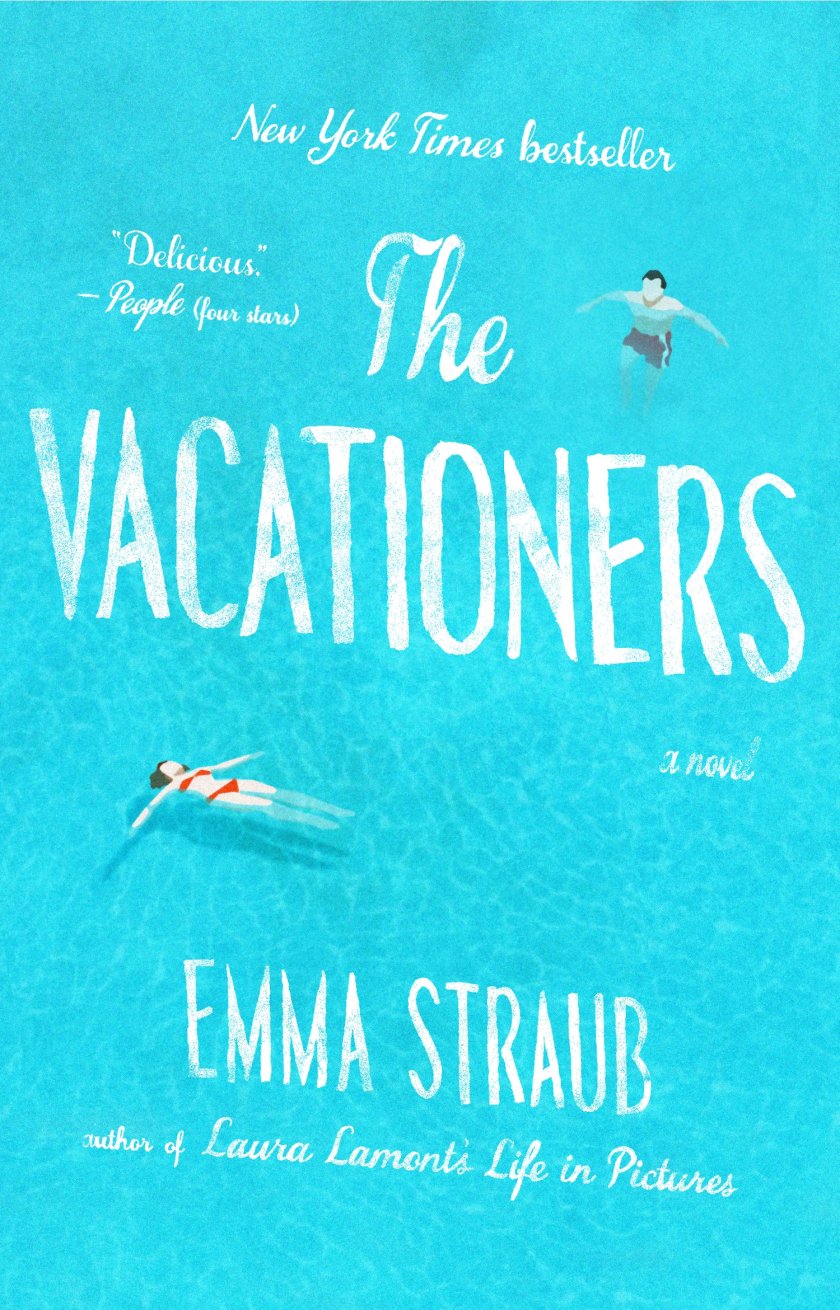
I am going to admit this up front: when I started reading The Vacationers by Emma Straub, I was a bit unsure. It’s not a book I would gravitate toward, but I knew it was a book I would enjoy. There was something about it that reminded me of Maine by J. Courtney Sullivan, a book that I basically anger-read because I was so irritated that I wasn’t reading another completely delicious book like Commencement (though in hindsight I should’ve seen it coming, and I have a lot of thoughts on Sullivan’s writing in general – specifically that she’s very good at what she does, but I digress – that’s fodder for another post). I was prepared to force myself to read The Vacationers.

Before you read any further, know that I did change my tune! I enjoyed it, it was the perfect book to read while lounging poolside during my break between summer camp and back to school. It lacked a bit of the urgency I usually crave in my beach reads (the kind where you find yourself staying up later than you should or developing a weird tan line from holding the book in front of you all day), but I have decided that’s because it’s more than a beach read. It’s a life read.

What do I mean by “life read”? Well, my oh my, did this book just read as real. I felt like I knew the characters, and I loved that we got all of their perspectives on the Mallorcan retreat they all seemed to be dragged on against their will. That is one of my favorite narrative devices in literature – the use of multiple perspectives to weave a story. I love it because it often provides insight that wouldn’t otherwise gain, and I’m always surprised at how much more likable characters can be when you’ve heard their voice and their thoughts. Or maybe I’m incredibly gullible and prone to seeing the good in people, even when they do a million things to make themselves wholly unlikable (BOBBY). So without any further adieu, here are my thoughts, character-by-character:

Franny: I wanted to feel bad for Franny, I really did. What a horrible mess Jim made for her. If I was her, I would be so angry, so hurt, I can’t even imagine what I would do. But at the same time, there was something so irritating about her. I think it was the way she was often described by other characters – particularly Lawrence and Sylvia. It just seemed like she was selfish and had a flair for the dramatic that would really grate on my nerves. By the end of the book, I admired her willingness to forgive, but not to forget, and not too quickly. And her personality seemed a bit more fun than I had initially given her credit for.

Jim: Ugh, Jim. As my husband would say, “what a maroon.” I mean really, how cliche could he be? The young intern (I hear you Jim, “editorial assistant”)?! But Straub did a great job of making him seem at least a little sorry, though still gross, and I ultimately decided that he just seemed more like a bumbling fool than a slimy philanderer.

Sylvia: SYLVIA! How I loved Sylvia! Regardless of whether or not you “were Sylvia” in high school, you can relate to Sylvia. I was so happy that she was able to cross an item off her pre-college “to do” list with Joan, though I wanted to punch him straight in the mouth after the beach trip. I was even more happy at her attitude toward him – there are so many things she could’ve done, she could’ve been the woman scorned, or been a weepy mess, and instead she just sort of owned the experience for what it was and gave him a high five. Go Sylvia!

Bobby: Another maroon! One whose mistakes were laid all out on the table for us to judge and who certainly did not do himself any favors. He was like an adult toddler, just a man who had not yet grown up. He seemed to be awakening to that reality at the end of the book though, and I always appreciate a character who gains some self-awareness and uses that to better him or herself.

Charles and Lawrence: I am putting these two together because I just love their relationship. We got glimpses of them as individuals, but so much of what stuck out to me was their understanding of their relationship and the others’ characterization of their relationship. It just seemed like a strong, happy union. When Charles was trying to tell Lawrence of his infidelity with the “bohunk art dealer from the gallery,” I found myself actually holding my breath, but dear, sweet, wise Lawrence already knew, and loved Charles anyway. It just reeked of confidence and security and I loved it.

Carmen: It was hilarious to me how universally un-liked Carmen was by everyone else, and in many ways, I think that actually made her more likable. I totally understood her perspective and her reasons for doing everything she did (even throwing Bobby under the bus). I was glad that she just dumped Bobby and moved on with her life. Though Carmen and I would never be friends in real life (we have virtually nothing in common), she’s a girl I’d like to see happy.