All posts tagged: book review

Don’t know why I couldn’t put it down

Tell The Wolves I’m Home was a really fast read… I think I finished it in about a week (and being 9 months pregnant with a toddler, that’s crazy fast for me). But I’m not sure why. I can’t say I loved the story all that much, or really related to any of the characters. And nothing tremendously dramatic happened during the 355 pages. But I’d sit down to read it and blow through 70 pages at a time. So, there must have been something gripping about it. I think it was the sisters’ relationship that kept me going. Honestly I didn’t really understand the Finn and June history or relationship (it felt a little dramatic for dramatic’s sake). But I liked watching the evolution between Greta and June. Although I wish they’d let us under the veil of what was going on with Greta a little more, but I guess that’s for our imaginations to figure out. And I think the friendship between Toby and June was well developed, and helped push the story along …

What You Say Can Never Be Exact

I am right on board with Katherine C. – I think this is one of my, possibly my absolute, favorite of the books we’ve read so far. I think my favorite part of the book was the way the narrative unfolded. It was like reading the way we actually think – the story opening up a little at a time, swaying from past to present to fact to feeling. Once I read the Historical Notes, I understood the perspective of the story more clearly, and I thought back to something I read earlier in the book. It’s impossible to say a thing exactly the way it was, because what you say can never be exact, you always have to leave something out, there are too many parts, sides, crosscurrents, nuances; too many gestures, which could mean this or that, too many shapes which can never be fully described, too many flavors, in the air or on the tongue, half-colors, too many. It’s interesting to then think back on the story and think of all the …

A Peaceful End

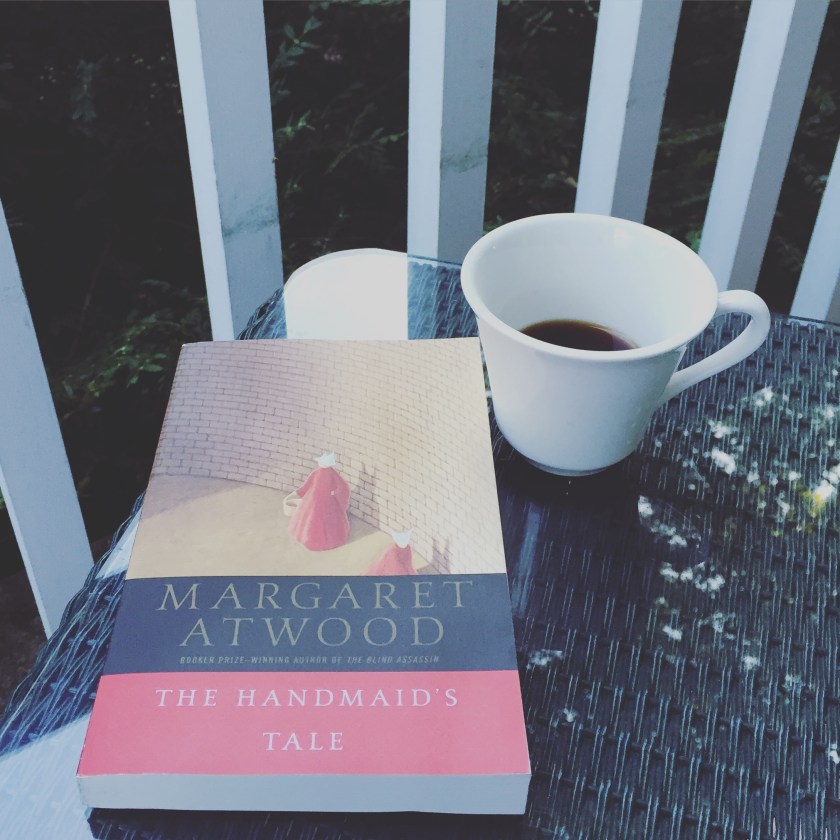
Of all the books we’ve read so far, I think this one is by far my favorite. I loved the premiss, the storyline, the writing style, and the ending. I’d never read anything by Margaret Atwood before, but The Handmaid’s Tale definitely makes me want to pick up a few more of her books. One thing I love is Atwood’s insistence that the story is not science fiction. Yes, it’s fiction, but she says everything that happens in her novels is possible and/or may even have already happened. This perspective really added to the experience of this story. As I was reading, every time I would think how crazy the lives were that these characters were leading, I’d think back to real-world scenarios where mass-brainwashing has caused similar or more significant atrocities (the holocaust, public stoning of women, child labor, etc). It makes the themes and events in Offred’s story that much more powerful and relevant. It read to me like a lot more than just a women’s story. “Maybe none of this is about control. Maybe it isn’t really …

…Were Watching Love

I enjoyed this book a lot more than I thought I would. Although the vernacular was hard to read through at times (just slowed things down a bit), I thought the pacing was well done (her use of time pulls you through the story… 25+ years in less than 200 pages) and her writing style was captivating. After reading the last page, I went back and read the first two paragraphs: “Ships at a distance have every man’s wish on board. For some they come in with the tide. For others they sail forever on the horizon, never out of sight, never landing until the Watcher turns his eyes away in resignation, his dreams mocked to death by the Time. That is the life of men. Now, women forget all those things they don’t want to remember, and remember everything they don’t want to forget. The dream is the truth. Then they act and do things accordingly.” Rereading this intro gave the book a clarity for me. It’s as though Hurston puts the thesis of protagonist …

All the Parts

Their Eyes Were Watching God was a profoundly communicative summation of parts that created a rhythmic narrative of the many lives of Janie.  Janie, herself, is certainly a workhorse character embodying many lives. Each of her lives served a distinct purpose to describe the struggles of mankind (man or woman, black or white) – the struggles of balancing the innate desire to stand alone, free, and independent with the crushing need for love and the struggles of defining community and oneself within community. Zora Neale Hurston created Janie as a heroine for the African American woman. While their eyes were watching God, Janie’s were strictly focused on determining her own path. As complicated as the many lives of Janie were the decidedly varied narrative techniques. Oscillating between vernacular speech and highly rhetorical narration, Zora Neale Hurston’s diverse writing style helps define Janie’s loves and lives.  Janie moves from a stifled relationship with Jody wherein she does not speak rather is spoken for to her verbose, solid relationship with Tea Cake.  The intercut use of Southern …

Made For the Beach

I have to say, I’m a little undecided on this one. I think I liked it. I do wish I’d had more beach time with this book. Instead, a lot of my reading time was spent rushed and indoors during my daughter’s nap time. I agree with Kathryn H. that it lacked a bit of the page-turning urgency that I usually enjoy for a good beach read. But even still, the individual characters’ end goals were just interesting enough to make you want to hang on and see if they were fulfilled. And I did like the use of multiple character perspectives… it allowed me to feel connected, at least in some way, to each of the characters. Although I do wish they’d all been a little more relatable. There were parts of each character that seemed not to fit, that seemed contradictory in a way (Franny seems to have few redeeming qualities, and yet Jim is still so in love with her despite his indiscretions… that feels a bit unrealistic, or like I’m missing something). I …

I Want to High Five Sylvia

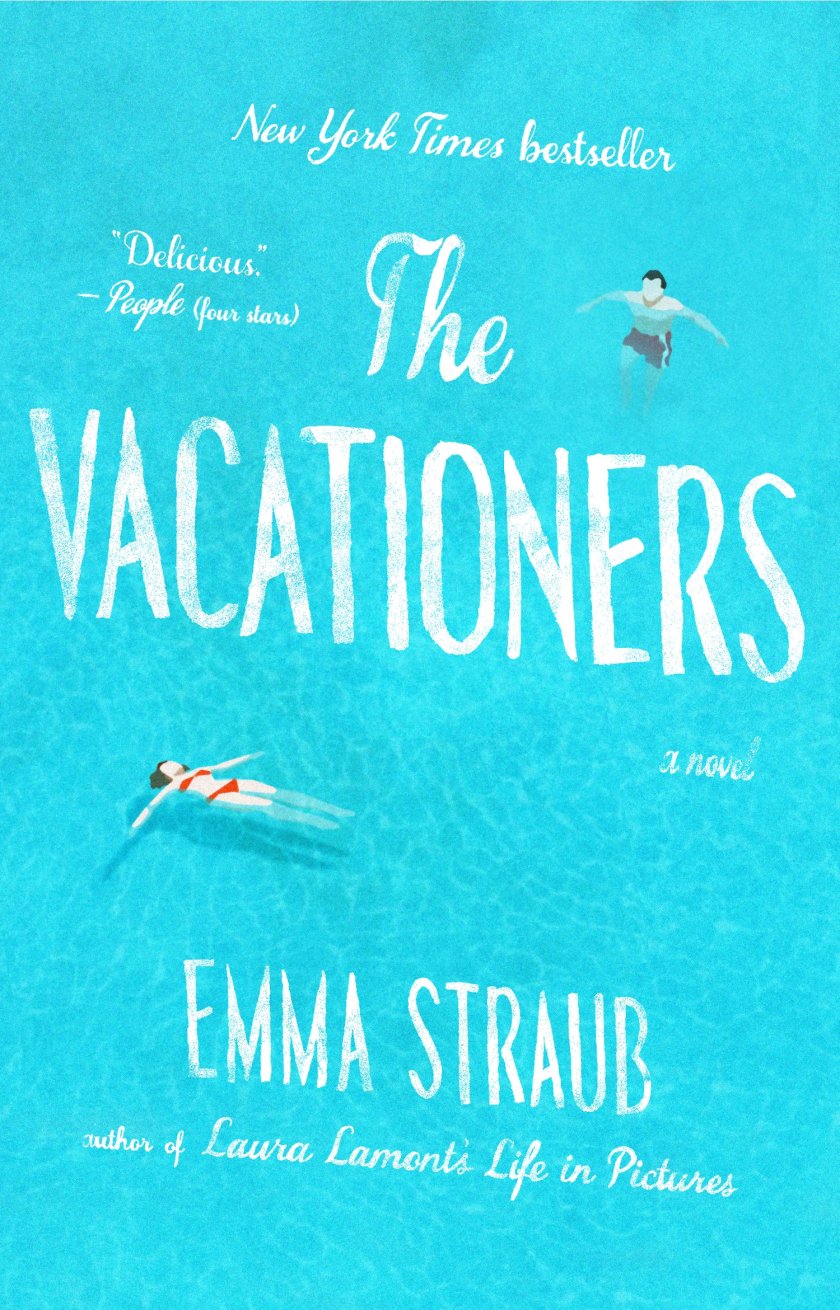
I am going to admit this up front: when I started reading The Vacationers by Emma Straub, I was a bit unsure. It’s not a book I would gravitate toward, but I knew it was a book I would enjoy. There was something about it that reminded me of Maine by J. Courtney Sullivan, a book that I basically anger-read because I was so irritated that I wasn’t reading another completely delicious book like Commencement (though in hindsight I should’ve seen it coming, and I have a lot of thoughts on Sullivan’s writing in general – specifically that she’s very good at what she does, but I digress – that’s fodder for another post). I was prepared to force myself to read The Vacationers. Before you read any further, know that I did change my tune! I enjoyed it, it was the perfect book to read while lounging poolside during my break between summer camp and back to school. It lacked a bit of the urgency I usually crave in my beach reads (the kind where you find yourself …

Yes, We SHOULD All Be Feminists.

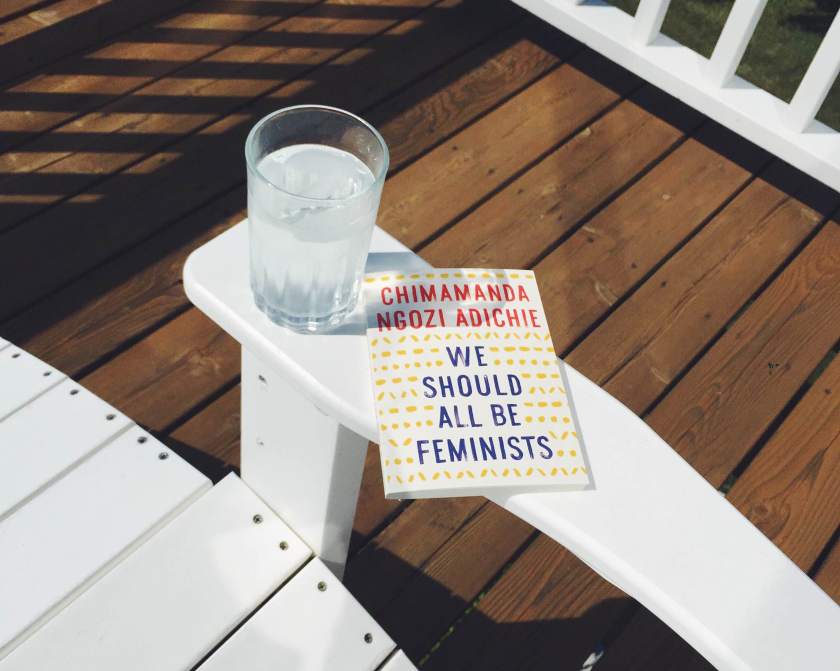
As I read Chimamanda Ngozi Adichie’s TEDx talk and then Katherine C.’s review, one word just kept repeating in my head: “yes.” Yes to being unapologetic in our femininity – you can enjoy being feminine and still be a feminist. Yes to raising our daughters and our sons differently so they may enjoy a world where men and women are equal. Yes to equal pay and all the other benefits that go along with women having the same rights as men. Yes to embracing feminism and recognizing that being a feminist simply means supporting the basic principle that women should have the same rights and opportunities as men have. Yes to all of it. All that being said, I do feel lucky that in the United States we have at least come far enough that some of the issues Adichie describes in Nigeria do not exist. But what kind of praise is that? “Well, at least when I tip someone the tipped thanks me and not my husband” is not quite a glowing recommendation for …

Feminism: I know you are but what am I?

I agree with Katherine C.  I’m bored of this conversation.  That is not necessarily a critique of Adichie’s writing or thoughts. It just that it is just that – writing and thoughts.  Frankly, you have to be the most isolated naïve person (male or female) to not appreciate the glaring discrepancies in gender equality.  I am not just speaking to places in the world, like Nigeria, where these social constraints are newly being addressed.  I am talking about here at home.  We all see it and live it every day.  I get called “nurse,” “honey,” “blue eyes” on the daily at work.  But, you know what, it doesn’t bother me all that much because 1. I have bigger fish to fry and 2. I can’t let it. As much as the concept of feminism is marred with a negative societal connotation of a movement of the brashy broad juiced up on hormones and self-rightoutsness, the real problem is simple.  The real problem is that feminism is not anything.  It isn’t an action.  It isn’t change. Feminism …

Why aren’t we all feminists already?

This was an interesting read. It made me think a lot about how I define feminism. Author, or speaker rather, Chimamanda Ngozi Adichie had a beautiful way of articulating complex issues and crystallizing her point for a diverse audience. I definitely enjoyed the read, but I think she only skimmed the surface. Which is unfortunately the current status of feminism in our county. In my opinion, the conversation she provokes in We Should All Be Feminists is the same one we’ve been having for 30 years. Yadda, yadda. Personally, I’m done with this broken record. Take it out of rotation. Let’s get on board with the issues already and elevate the conversation. Don’t get me wrong, I liked all of Adichie’s points… It’s time the word feminism retained less of a negative connotation. In fact, it should have a positive connotation. And we should raise our daughters to a higher standard, instead of asking them to shrink themselves into smaller, more feminine, role. And all this change is within our control, “culture does not make people. People make people.” But …