Latest Posts

Fast and Loose with Stiff

It took me longer than I’d expected to finish(ish) this one. I was excited to read this one, but it came at a busy time… the holidays, my brother’s wedding, the onset of winter illnesses for every member of my family. Ya know, the usual December/January stuff.

So, I started off strong, but things kind of tapered off toward the end. I definitely enjoyed what I read, and learned a lot. There is a surprising amount to learn from cadaver “lives.” But I guess that’s what I liked most about this book, not only was it well written with a healthy lighten-the-mood sense of humor, but you could jump around with the chapters if needed. For example, I didn’t really have an interest in reading about plane crash cadavers. As a nervous flyer, I thought I’d do us all a favor by avoiding that one. But “Crimes of Anatomy,” “Holy Cadaver,” and “How to Know if You’re Dead” were my personal favorites. But, admittedly, there were a few more chapters at the end that I didn’t read. They might be great, but I just got to the point where I needed to move on to something else (our world these days has me leaning away from nonfiction and heavy into escapist fiction. Currently reading: Ready Player One).

Anyway, I thought this was a good read. And something you can pick up or put down at your leisure. Definitely a pro if you’re struggling to get through books these days, like me.

Stiff: An Interesting Case for Coping with Humor


As a physician and, I guess more specifically, someone who has participated in a gross anatomy lab, I have a specific point of view about human cadavers.  I will start by saying this – the book provides some truly interesting history on the matter.  For that point alone, I would say Roach’s book is a worthy one. Albeit, it is not one for everyone. The subject is a bit – um – macabre.  If you didn’t know that from the cover, I’m not sure reading is for you.

Now what I really took away from this book is that how we deal with things that make us uncomfortable is rather universal. I often wondered why I wasn’t more bothered by anatomy lab my first year of medical school. I didn’t particularly want to get physically sick or feel overwhelming guilt. But I also didn’t want to feel how I did – like it was normal. There was nothing normal about what I was doing. History may suggest otherwise. Personally, though, gross anatomy lab was decidedly NOT normal, but it felt that way. It felt normal. I would go to lab, dissect the assigned part of my assigned cadaver* and then go home.

Now don’t read on if you can’t deal with “gross” things. During the day of orbital (fancy word for eye) dissection, I carefully enucleated my cadaver (fancy way of saying of taking out the eyeball). I passed on the globe (fancy world for eyeball) to my lab partner. I told her to be careful as she moved to dissecting open the eyeball. Instead she was a spaz (fancy word for one who spazes) and aggressively stabbed the globe. Basically, this ended with me with eyeball goop (technical word) all over my face screaming and running around the anatomy lab. Not even 10 minutes later, I was sitting in the locker room (with an aggressively scrubbed face) retelling this story and laughing. Because it was funny. I still maintain it is funny. In fact, I found myself writing this story as if it was funny without thinking about it.

Why is that funny? Because that is how we cope. Medicine is a shining example of humor as a coping mechanism to the nth degree. I’ve laughed at things that are decidedly horrible and make me look like an even more decidedly horrible person to an outsider. But to those in it, really in it, know. They know that we laugh so we don’t feel too shitty. So here I am reading Stiff and every other sentence is undercut with a joke, which I understand to extent is Roach’s style of writing. Largely, though, I think it is reflective of how we all deal with things that make us uncomfortable. We call it the human narrative because we are all telling our own story. Sometimes, we just want the cheerier story, even when we are talking about death.

* His name was Lloyd. My medical school thought it was more appropriate to let us know their names, how old they were when they passed, and how they died. The goal was simple but overwhelmingly difficult to grasp – to make you realize that they were a person, they had a life, and this was the last gift they gave – their being for your learning.


Thank you, Lloyd.

December & January Book

Happy holidays! Hope you didn’t come here for a good holiday selection, because our next book probably couldn’t be farther from the holiday spirit. But it should be interested none-the-less! Maybe just start reading after Christmas?

dec_jan

We’ve combined December and January into one book. And in appreciation of the approaching new year we’ve picked our next book as a way to learn something new. Something that we might never otherwise have the occasion to learn.

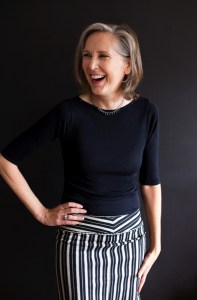
maryroachHave any of you ever heard of Mary Roach? She’s an author who has her roots in journalism and now writes books. She has published seven books, all of which deal with unique non-fiction subject matter. Most of which follow the same title formula of a single noun or adjective: Spook: Science Tackles the Afterlife (2005), Bonk: The Curious Coupling of Science and Sex (2008), Gulp: Adventures on the Alimentary Canal (2013), and Grunt: The Curious Science of Humans at War (2016).

Her style is notable for its humor, curiosity, and interesting subject matter. She becomes a part of her research in a lot of ways, even recruiting her husband to participate with her in a sex study for the benefit of Bonk. She has a creative and entertaining way of educating her readers in the obscure. So, we’ve chosen her bestseller as our next read!

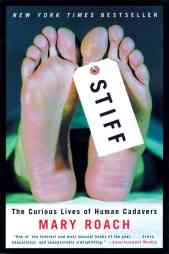
features-bookreviewstiffStiff: The Curious Lives of Human Cadavers (2003) by Mary Roach. For 2,000 years, cadavers have been involved in some of science’s greatest advancements and weirdest experiments. “Stiff is an oddly compelling, often hilarious exploration of the strange lives of our bodies postmortem.” It’s a NYT Bestseller, voted one of the best books of 2003 by numerous publications, and a 2003 Barnes & Noble Discover Great New Writers pick. It also won the Amazon.com Editor’s Choice award in 2003, was voted as a Borders Original Voices book, and was the winner of the Elle Reader’s Prize. And the list goes on!

The topic might be strange. Maybe you never thought of reading about such a topic. We certainly didn’t (with the exception of Dr. Dean, of course). But there’s a lot that these “Stiffs” have to teach us. So, we don’t know about you, but we’re in!

Happy reading in the new year! We hope you’ll join us in learning something new for 2017. And don’t forget to share using #booklymark.

What the…

Ok so I’m disturbed. Which is, I guess, the point of this book. But if the only point of the book is to disturb people, then I guess it is a success.  I’m not sure that tawdry is a driving force enough for me in my reads.  For my TV, absolutely.  I agree with Katherine C.  I was hoping for a more purpose to all the characters decisions and actions – some meaning to it all.  Not just money because that seems too easy.  I’ve got to be honest – I was just thinking that this must be the BEST lifetime movie. The absolute best.  I mean, right Katherine C.? I like my TV dumb and mindless and overly dramatic.  (AKA Real Housewives of Vanderpump Rules – Chopped edition. Also just in case you have also read this far…anything where they cook cupcakes – I’m all over that.)

The problem is is that while reading the book, I just thought about that 1. icky and 2. I gotta get my hands on the lifetime movie. So I’m going to give this book a no. Just no.


Deeply Disturbing

Whoa. That was … interesting. Somehow it felt very 70’s. I’m not sure why. Were the 70’s filled with child abuse and incest? This book would make you think so. Yikes.

So yeah, Flowers in the Attic was very dark. I guess that’s to be expected considering the fact it’s about a narcissistic mother who locks her four children in an Attic for years. There’s that tiny happy part in the beginning, and then you just drudge for hundreds of pages through the poor lives of these innocent children living like abused zoo animals. It was pretty sad at parts, and really disturbing at others. And to what end? I’m not sure. I feel like for a book to have such dark and disturbing content there should be a reason for it… a particular message, lesson learned, or necessary story to tell. But with Flowers in the Attic there didn’t seem to be a need for half of it… like when Chris feeds them his blood. Really?

Although, I will say I liked the ending. It helped me change my mind about the book. If there’d been a different ending I wouldn’t have liked the book. But the ending brought things full circle and presented a few good twists. It made me want to read on about the future of the Dollangangers… but maybe on Wikipedia instead of the rest of the series. If there were about 50 fewer pages in the middle (a little less cannibalism and incest) I would have liked it. But I think my final thoughts are… indifferent. Didn’t love it, didn’t hate it.

But I AM intrigued by the Lifetime movie…

Books Heal

This election, elections of any kind for that matter, should (should have) spark people’s interest in their civic duties and obligations to each other as American citizens and, more importantly, as global citizens. So, no matter your politics, what can we do to work better together, move forward, and improve this country for all its citizens? Well, there are a number of options, but here we’re all about books. Clearly.

So read. Read as much as you can, as often as you can. Learn. Learn more and more. Never stop broadening your knowledge of people, history, politics, the world, the universe, our health, our future. So let’s keep striving to be better, and read. Here are some of our suggestions of where to start:

  • Welcome to the Universe
    by Neil deGrasse Tyson, Michael A Strauss, J Richard Gott III
  • Mom & Me & Mom
    by Maya Angelou
  • Profiles in Courage
    by John F. Kennedy
  • Thinking, Fast and Slow
    by Daniel Kahneman
  • Sapiens: A Brief History of Humankind
    by Yuval Noah Harari
  • The Fire Next Time
    by James Baldwin
  • Parting the Waters: Martin Luther King and the Civil Rights Movement 1954-63
    by Taylor Branch
  • Shrill: Notes from a Loud Woman
    by Lindy West
  • Between the World and Me
    by Ta-Nehisi Coates
  • On the Run: Fugitive Life in an American City
    by Alice Goffman
  • David and Goliath: Underdogs, Misfits, and the Art of Battling Giants
    by Malcolm Gladwell
  • What I Told My Daughter: Lessons from Leaders on Raising the Next Generation of Empowered Women
    by Nina Tassler
  • When Breath Becomes Air
    by Paul Kalanithi
  • I Am Malala: The Story of the Girl Who Stood Up for Education and Was Shot by the Taliban
    by Malala Yousafzai
  • Behind the Beautiful Forevers: Life, Death, and Hope in a Mumbai Undercity
    by Katherine Boo
  • Daring Greatly: How the Courage to Be Vulnerable Transforms the Way We Live, Love, Parent, and Lead
    by Brené Brown
  • At Home: A Short History of Private Life
    by Bill Bryson
  • The Sixth Extinction: An Unnatural History
    by Elizabeth Kolbert
  • Nickel and Dimed: On (Not) Getting By in America
    by Barbara Ehrenreich
  • Missoula: Rape and the Justice System in a College Town
    by Jon Krakauer
  • We Should All Be Feminists
    by Chimamanda Ngozi Adichie
  • Hillbilly Elegy by JD Vance

Finish this list over the next 24 months, and let’s talk again during the midterm elections.
Any others to add the list? Let us know in your comments!

Read on.

November Book

With November comes the start of the holiday season, which means lots of family time… and that can mean tension, frustration, and sometimes drama.

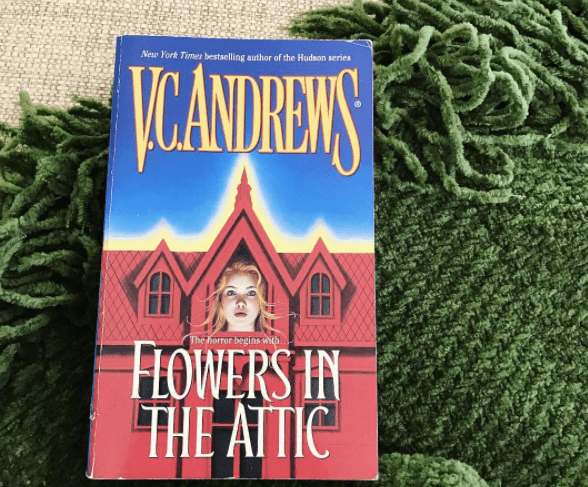
Which brings us to our November pick: Flowers in the Attic by V.C. Andrews. The first in thedollanganger01_flowersintheattic popular Dollanganger series, this disturbing tale tells the story of the Dollanganger kids. Hidden in the attic because of a family fortune, Chris, Cathy, and the twins are prepared to stay in the creepy alcove for a few days. But soon those days turn into years, and they are forced to adapt to this new life, isolated and with very little to survive.

Written in 1979, Flowers in the Attic was what launched Andrews’ extraordinary career and creating a loyal fanbase. Now a Lifetime movie, this haunting novel will make you happy for the family you have.

From the back cover: “This enduring masterpiece of psychological suspense remains the most famous and provocative novel from V.C. Andrews, one of the most popular storytellers of all time.”

Pleasantly Surprised

Hi all! Sorry I’m a little behind the curve this month. Non-stop coughs and stuffy noses have kept me preoccupied.

But I’ll get to the point. I really enjoyed our October book! I didn’t have many expectations. Until voting on this as our October selection I hadn’t even heard of this book. But it was a pleasant surprise. I thought it was a great story, and it was very well written. It was hard to read at times, considering it was about the abduction of a daughter, and the subsequent but inevitable decline of a formerly nuclear family. But I was on the edge of my seat the entire 375 pages.

I loved how the author referred to certain characters as just “he” or “the boy.” It gave the characters just enough anonymity to build relatability. But at the same time, he managed to write the characters with such depth and realism. I love when a writer can tell you so much in just a few words. And that’s what it was like reading Descent. Johnston constructed so much emotion and suspense with just a few well-chosen words. And speaking of suspense, the story itself was like the best law and order SVU episode you’ve ever seen. Like one of those 3-part events where Olivia finally cuffs the especially gruesome bad guy after an entire season of torment. Ya know?

So, if you haven’t heard of this one, or don’t have it on your list, you should definitely make this your next thriller/suspense/mystery read. Happy reading!

A [Thrilling] Ride Through the Rockies

Most of the time when I pick up a suspense novel I expect writing that’s okay, but nothing too notable–which never bothers me, as long as I’m entertained. So I was pleasantly surprised by how much I liked Tim Johnston’s way with words. He does a phenomenal job of depicting each personality, describing the environment, drawing out the tensions–allowing you to really absorb yourself in the story , despite the fact that it’s not your typical edge-of-your-seat thriller.

While the story starts in a dramatic fashion, the majority of the novel is a very slow burn, setting up the characters–and I consider the Rocky Mountains to be one of them–in a way that makes you in no hurry to get to the end. In fact, the way in which Johnston incorporates the book’s setting is something at which he’s particularly skilled.

There are still some things I’m working through–Caitlin’s mother, recurring themes that I don’t know what to make of, Sean and his role in the family–all signs that this is a book I won’t soon forget.

If you’ve read it, what do you think? Do you have lingering questions, too?

Descent – It’s Decent

Honest to God, I thought this book was called Decent. I actually told someone I was going to start a book called Decent. And he said, “are you sure that is what it is called?” Aptly, this is what I ended up thinking of the book. Descent is decent.

First of all, I must admit to something. I did not actually read this book.  I decided to take advantage of the free Audible book and try it as a “book on tape.”  This allowed me to listen to the book as I walked my dog, traveled to work, or took the subway. I have listened to books on tape on road trips before but never on my phone. I found this a great way to enjoy a book when my schedule isn’t really allowing for it.  Admittedly, it did take a little bit out of the enjoyment of the book.  Listening to a man’s voice speak as a woman – yea not so much.

Let’s start with what I enjoyed about the book. The beautiful writing drove this creepy and tragic story forward with ease – always keeping you guessing. Each chapter providing a bit of confusion by reintroducing characters without saying their names at different times. What man? What boy? It created mysteries within the mystery that slowly unfolded as the chapter moved forward. I loved the concept of the son, Shawn, being referred to as a boy when every experience and manifestation of his being was no longer a boy. It created a sense that nothing and no one was what they seemed or what they were meant to be. The development of each scene was executed beautifully and the story’s conclusion was an undeniable page turner (or whatever the book on tape equivalent is).

The only complaint about the book is the character development. Now, I understand the premise of the seeing the downward descent of a family consumed in tragedy. They become more and more separated both physically and emotionally, which is further highlighted by the switching perspectives. However, I had trouble buying some of the character turns. Not a chance that a family who lost one child would allow their other child to just aimlessly drive around the states alone – a seemingly pointless side story.  The decided dirtbag of the book takes an even more inexplicable character turn (no spoilers).

That being said – this was a creepy book with a pulsating storyline that I enjoyed. I just didn’t really “get” the characters. So overall – its decent.