Latest Posts

{Betrayal} Cover Redesign

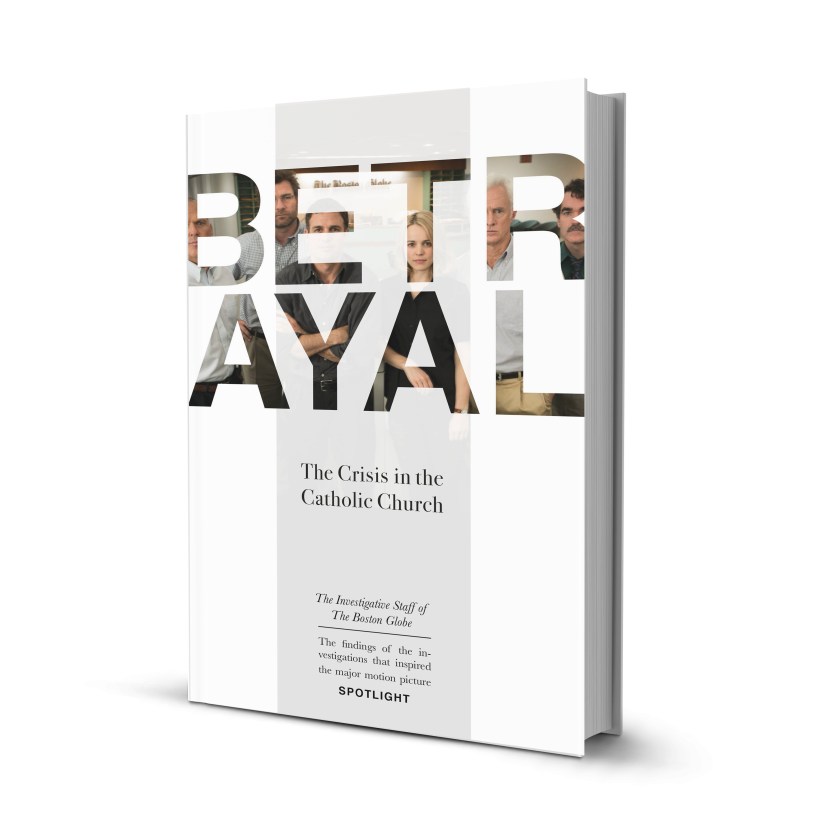
I‘m sure most of you have heard about this year’s Oscar winner for Best Picture: SPOTLIGHT. It’s an intense story about The Boston Globe’s special “Spotlight” team of journalists who, in the early 2000’s, investigated a decades-long conspiracy in the Catholic Church. And the book, Betrayal, is what the Spotlight team wrote after their years of award-winning investigative reporting. It’s a serious read that deserves a better cover than either of what’s currently out there.

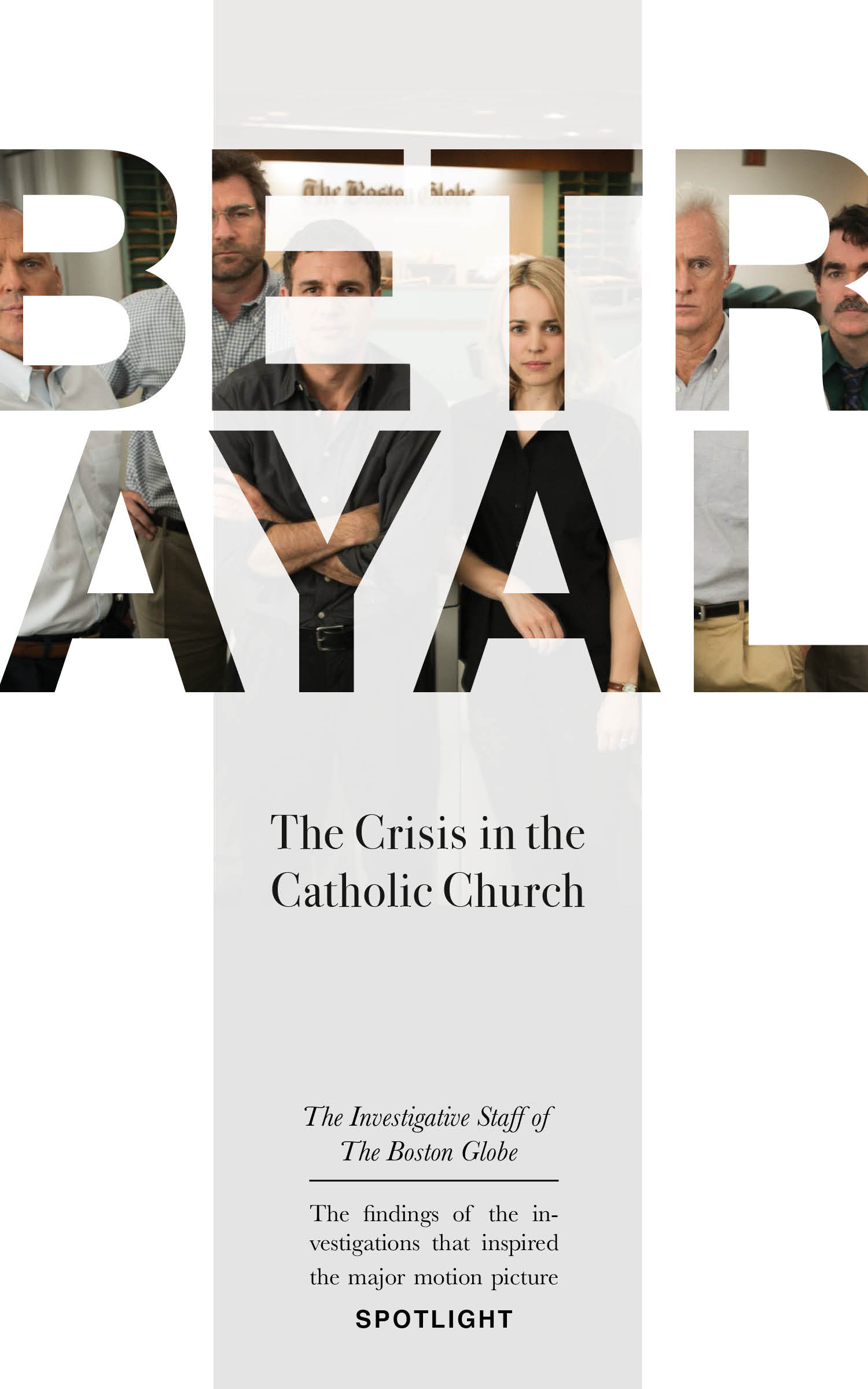
51qgSwZHEuL._SX331_BO1,204,203,200_So, as I do on occasion (when having two kids under two-years-old will allow), I’ve re-designed an alternative cover for our March read. I tried to keep a subtle religious theme with the text and image column creating the shape of a cross, and then tying in the newspaper influence with the subhead copy being arranged in a way that’s similar to a newspaper column. I think if Betrayal actually hit the shelves with this cover, the book could reach a whole new audience! But, for now we’ll just keep it between us until my little ones grow up and I have time to become a super famous book cover designer (is there such a thing?). Hope you like it!!


Betrayal Cover

Image Source: Open Road Films

Title Font: Helvetica

Subhead Font: Bodoni

Caption Font: Baskerville


An Unlikeable Must-Read

Betrayal was a difficult book to read. Frankly, at times it felt like reading just a laundry list of sexual abuse crimes. Gory detail after gory detail. One after the other, after the other. You get the idea. And as I was reading my husband kept asking me, “are you liking it?” and I wouldn’t know how to answer. I’m not sure if this is a book you can “like.” It’s not one you read casually. Instead, it’s one you read out of necessity. The stories this book tells are important ones that I think everyone should know more about.

To catch you up to speed, Betrayal: The Crisis in the Catholic Church was written by the Spotlight team of journalists at The Boston Globe in the early 2000’s. It unveils the Boston-area Catholic Church’s deliberate negligence and cover-up of sexual abuse crimes committed by hundreds of its clergy members, allowing them to abuse thousands of victims for decades. The book is a compilation of the 600 different Spotlight investigative reports. It’s a battery of case files, statistics, victim testimonies, and allegations. As I was reading, I felt both badgered with detail and compelled to read on and learn more out of respect for these victims.

There were more than a few times when I had to put the book down and look away. I grew up in the Catholic Church (kind of). Until around 12 years old my family and I spent a lot of Sunday mornings at Church. But as years passed, and the Church’s innumerable flaws came to the surface, we stopped attending. And even though I now consider myself spiritual (and religious in some ways), I’ve stopped considering myself Catholic (not that my ties were very strong to begin with). And for me, this book has reaffirmed that decision.

The crimes committed by the abusers are only equalled (if not surpassed) by the Church’s complete and abject failure to protect its children from repeated, horrific, sexual abuse. As grotesque as its subject matter may be, this book is important to read.


“Among all the priests who dedicated themselves to healing souls and soothing hearts, some only pretended to do so. Their sexual misbehavior took a staggering toll on the victims, on the victims’ loved ones, and on the Church: souls darkened, hearts broken, lives shattered, families disillusioned, faith abandoned, and the Church exposed to potentially catastrophic claims.”


It’s important to know what happened. We need to make sure this never happens again. And it’s important to understand more about the why’s and hows. For example, the chapter I found the most interesting was ‘Sex and the Church’ which addresses the questions surrounding these crimes, more specifically, why did (does) this happen? This is a complete psychiatric phenomenon that presents itself at an intensity ONLY in the Catholic Church. Most people are quick to blame celibacy and/or homosexuality. However, no evidential proof has been found to connect the two with the incidence of sexual abuse. Or maybe it’s because there’s a mentality of “boys will be boys,” and unlike with young girls there’s not the same supervision or suspicion involved when a priest takes interest in a young man. Well, I don’t believe that no supervision equals a criminal act. But yes, it makes it easier to perpetuate.


“There is a danger of cynicism becoming so bad that too many people will presume that all priests are like that, and that’s no fair either. My feeling about priests is like my feeling about cops. Most are good. But if there are bad ones, I’ll go after them. And the few bad ones are making everybody else look bad.”


So why does this happen? Well, there’s no real answer. Yet. Very few reports / studies / thought leaders are asking this question from a medical and/or sociological perspective. Or they haven’t received the recognition and action they deserve. But I hope they will. The answer won’t be a simple one, but I believe the Church’s unique environment of fraternity, loyalty, discretion, secrecy and guilt creates a safe haven for these criminals. And unfortunately that has hurt more men and women than we’ll ever know.

The Spotlight team at The Boston Globe fought hard to bring these crimes to justice and give a grain of peace to the victims. It’s the journey that those journalists took to tell these stories that’s depicted in the movie Spotlight. As anyone will tell you, the move was great! Obviously the Academy agrees considering it won Best Picture at this year’s Oscars. I definitely urge you to see the movie! And I read the book before I saw the movie, but I think it might be a better choice to see the movie before reading the book. The movie tells such a powerful story of the efforts made by many to bring these stories to light, that  knowing more about the work it took to tell these stories might give you that much more appreciation for stories themselves.

Wow. I know I’ve said a lot (longest post award?).

But I want to end this with a story from Betrayal. Just in case you don’t read this book, I think you should know about Tom Blanchette:

Tom Blanchette is a victim of Father Birmingham’s sexual abuse. The abuse started when he was eleven years old (the 1960s). He was repeatedly attacked (he estimates 300 times). He says he held onto immeasurable anger for years afterward. Unlike most victims, he confronted his tormentor.

In 1988, Blanchette visited Father Birmingham at his Church (yes, he was still an active priest even after several past accusations) and got the chance to say these words to him, “What you did to us -and to me specifically- was wrong, and you had no right to do that. Having said that, it brings me to the real reason I’ve come here. The real reason I’ve come here is to ask you to forgive me for the hatred and resentment that I have felt toward you for the last twenty-five years.” When Birmingham asks why, Blanchette responded, “Because the Bible tells me to love my enemies and to pray for those who persecute me.” Birmingham then dissolved into tears, collapsing on the floor.

Blanchette did not see his abuser again until the following year, the day he died, at Symmes Hospital. Birmingham was then an 80 pound skeleton dying slowly of cancer, sitting by his hospital room window. And that’s where his story ends. Blanchette prayed with him, helped him into his hospital bed, and Birmingham died the next morning.

March Book

Image © NPR.org

Every year Hollywood’s awards season starts in November and doesn’t end until late February. The Golden Globes, Screen Actors Guild Awards and the Academy Awards are some of the most well-known (probably because their red carpets get full E! coverage). And if you’re anything like us, you make time to watch all the fashion, speeches, glitz, and glamour of self-congratulatory Hollywood. But there’s one pattern we’ve noticed over the years, and that’s the number of nominated films that are based on books.

MarchIn fact, of the 87 films awarded the Academy Award for best picture since its inception in 1928, 62 have been based on books. This year alone, seven of the eight films nominated for best picture are based on books: The Big Short, Bridge of Spies, Brooklyn, The Martian, Room, The Revenant, and Spotlight. So, as you may already know, March is our Screenplay month when we read a book that’s been made into a movie and ask ourselves the question; is the book really better than the movie?

41L5KMxE4DL._SX333_BO1,204,203,200_Which brings us to our book choice this month (drum roll please!)… Betrayal: The Crisis in the Catholic Church (the findings of the investigation that inspired the major motion picture Spotlight). In 2001 a group of reporters for The Boston Globe started a series of reports on the Catholic Church’s management of the sexual abuse of children by Catholic priests in Boston. Named the “Spotlight” team, this group of journalists (reporters Matt Carroll, Sacha Pfeiffer, and Michael Rezendes; and editor Walter V. Robinson) methodically and publicly uncovered the Catholic church’s decades-long neglect, denial and deliberate coverup of sexual abuse committed by numerous Boston area priests.

1200_spotlight_in_toronto[1]-4107

Eventually winning a Pulitzer Prize for their work, these reporters and their conviction to bring these criminals and their accomplices to justice caught the eye of film producers and writer/director Tom McCarthy. He sought to tell the story of these journalists and their journey to tell the truth, at all costs, behind a damaging conspiracy. And it would seem McCarthy’s storytelling has been a success considering his film Spotlight is now nominated for 6 Academy Awards including directing and best picture. We expect that learning more about this conspiracy and its unveiling will prove a difficult, but necessary, exercise in understanding what institutions of power are capable of and how to prevent such devastation in the future.

Learn more about this story:

We hope you’ll read with us! Share your progress/thoughts with us on Instagram or Twitter using #BooklyMark.

Mending a Broken Heart

This book broke my heart over and over again. My heart broke for Eleanor, for Park, for Eleanor and Park. I was completely shattered. I was preparing myself to be totally destroyed by the ending, and then… and then came the last line of the book and I was lifted. I know Rowell was purposely vague and I am sure there are those who did not read the ending as positively as I did. But I am the eternal optimist, I’m hopeful, and I’m always searching for happy endings. So I am choosing to believe that those three words on the postcard were “I love you,” because if they weren’t, I would just simply be crushed.

I know other Bookly Clubbers disagree, but I adored this book. I felt so strongly for, related to, and identified with both Eleanor and Park on so many levels that I couldn’t help but love the story. I remember being a teenager, and even a young adult to a certain extent, and wondering how it was that so-and-so felt the way they did. I also remember, like Park, feeling simultaneously protective of the person you cared for, but also defensive of/embarrassed for your feelings – why must they be the way they are? I was unfortunately not always as noble as Park. I so admire his ability to stand by Eleanor, his feelings for her, and their relationship.

Rowell’s writing, her descriptive language, the dual perspectives that often overlapped to show just how in synch Eleanor and Park were, took me back and reminded me what new, young love feels like. That feeling of everything being so fresh, like nothing can come between you and life could never get better. That feeling of invincibility. I wish I
could go back in time and tell myself to savor it. Not because it gets worse, it doesn’t. It gets so much better! But simply because it’s a feeling unique to youthful love. I am in awe of Rowell’s ability to capture “this.”

She never felt like she belonged anywhere, except for when she was lying on her bed, pretending to be somewhere else.

At the same time, I also felt so deeply bad for Eleanor. My heart ached for her and hoped for her. For Eleanor to keep so much inside and to take on such a burden was what drew me to her and endeared her to me. I was glad to see her open up over the course of the book to Park and eventually to her uncle.

Rainbow Rowell, if you ever read this: thank you.

Our First Year of Bookly!

Hooray! We’ve officially completed one year of Bookly.

If you’ve been following along since the beginning (thank you!) you might remember we read our very first book last March. The book was Still Alice. And we’ve read a lot of other great ones over this past year (the short and smart We Should All be Feminists, a good tug at the heart strings from Tell The Wolves I’m Home, and the bizarre but fascinating The Handmaid’s Tale, to name a few).

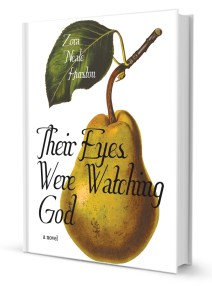
TEWWG_BookCoverThis year we’ve also shared some great cover redesigns,
newsworthy bulletins, and helpful recommendations! And we hope you’ve enjoyed it all, and maybe learned a little something new. We’ve definitely enjoyed sharing these past 12 months (and 9 books) with you all!

With February coming to a close, that means we’re starting a whole new year of Bookly picks and posts. And if you’re new here we hope you’ll join the Bookly club!

Here’s a little refresher on how our book club works, AND a few hints at what we’ll be reading this year 🙂

The Bookly Club was started as an online book club for all by four college friends ALL named “Katherine.” We’re now spread out between New York, Chicago and Baltimore. We get together as often as we can, but one thing we’ve always wanted to do was join a book club together. And since geography gets in our way… here we are!

{ The Rules }
  1. The reading materials can take any form… novels, articles, poems, graphic novels, etc.
  2. Nothing over 400 pages
  3. Every Bookly book has a monthly theme

What makes Bookly a little different is our monthly themes. Each month focuses on a book that fits that time of year…

FullViewCalendar{March} Hollywood’s award season has just wrapped, so now we compare and contrast… was the book better than the movie? This year we’ve chosen a controversial book turned film that was nominated as an Oscar best picture in 2016.

{April} As the month dedicated to foolish pranks, it’s a good time to see the humor in all things… and there’s no one better to show us than an alumnus of The Office.

{May / June} School’s out for the summer! So now’s the time to dig into a beautiful, tragic and classic YA read from the late 90’s.

{July} As our most patriotic month, this month we choose a non-fiction book to teach us more about our history as Americans. This year we’ll be reading a controversial book that brings up questions of who has the right to tell the story of others, and why?

{August} Finally, beach season is here! It’s time to soak up some sun, and the perfect beach read about three separate lives that come together in brave and unexpected ways.

{September} It’s back-to-school season, so we’ll be reading something off the required reading list… a an absolute classic that has recently come back into the spotlight.

{October} Spooooky! Now’s the perfect time for a good ghost story. This year we’ve chosen the story of a family haunted by the very sudden and mysterious loss of their daughter.

{November} Families are by nature dysfunctional. And there’s nothing like the start of the holiday season to bring that to light. This year’s book will tell the story of a family so dysfunctional they hide their secrets away in the attic.

{December / January} It’s time to learn something new! And for 2017 get ready to learn about a phase of life you probably never thought you’d need / want to know more about.

{February} The perfect time for a classic love story… surprisingly some of us have gone decades without reading this classic. Maybe we’ve just been too proud, until now.

Intrigued? Get ready for another great year (even better, we hope) of Bookly.
Happy reading!

(don’t forget to follow us on Instagram and Twitter)

All the Feels

Confession: I read this book months ago.

While details of the story might be fuzzy, how I felt about it isn’t. I devoured this book, so consumed by the relationship of Eleanor and Park that I stayed up into the wee hours, finishing it in a couple of days. I recommended it to anyone who hadn’t already been charmed by the quirky characters and the innocence of first love.

This is why I love books; how it resonates – or doesn’t – with the reader varies from person to person. It’s dependent on their life experiences, who they are, what they believe, what makes them feel. For Katie C., this book didn’t resonate, a totally legitimate reaction. But for me, it took hold within the first few pages.

I was what some might call a late bloomer. I didn’t have my first kiss until I was 16, my first boyfriend until 17. This kind of young love that bonded Eleanor and Park is something I’m unfamiliar with. And that might be the reason it fascinated me as much as it did – their story was foreign to my high school experience.

I had crushes, sure. But nothing close to the type of relationship that the main characters experienced. For Eleanor, Park was a much needed refuge from her incredibly challenging home life. For Park, Eleanor was someone who understood him like no one in his life could.

For some this book might remind them of what their first love was like; for others – like me – it allows them to step into a love they never got to experience.

Eleanor and Park left their mark on me – it’s a book I won’t soon forget, no matter how long it’s been since I read it.

Just not that into… this book

This was the first Rainbow Rowell book I’ve read. But I’ve been hearing a lot about her recently. Similar to John Green, I feel like her books have found sudden popularity in the YA world. So with all the hype, especially surrounding Eleanor & Park, I was definitely excited to read this one.

I’ll be honest, I’ve never been a huge fan of YA books. Well, let me explain. A book like this is not typically my first choice, but when I have read YA books I’ve really enjoyed them. I’m not ashamed to admit I’ve read all the Hunger Games, Twilight and Divergent series, and loved each and every one of them.

Anyway, I didn’t have SUPER high expectations for Eleanor & Park, but I did expect to enjoy it… unfortunately, I was wrong. Maybe it’s because I didn’t fall in love until I was in my 20’s, or maybe because I never had a high school relationship, or because by the time I was 18 I’d moved six times and never quite experienced a typical adolescence, but I couldn’t get invested in Eleanor and Park’s love story. To me it seemed silly, overly dramatic and unrealistic. Maybe that was intended? Maybe Rowell was making a commentary on young love and how it is all those things? If so, then I get it and I’d say I liked it. But overall I found it hard to get into the book because I couldn’t relate to the characters or their experiences. Sorry, this one just wasn’t for me.

February Book

Image © Haiku Deck

We’ve come full circle! This is our last book of 2015/2016 before we start anew in March. If you’ve been with us since the beginning you’ll recall that we first launched Bookly in March 2015 with Still Alice as part of our Screenplay theme in honor of Hollywood’s awards season.

For February, the month of Valentine’s Day, we’ll be reading a love story…


rainbow-rowellEleanor & Park by Rainbow Rowell. Although many are now familiar with Rowell’s name, and her books (Fangirl, Attachments and Landline), this was her first young adult novel. Published in 2013, Eleanor & Park follows these two protagonists from Omaha, Nebraska as they fall in love in the late 1980’s. At the young, innocent age of sixteen Eleanor and Park build a connection over mix tapes and comic books, and find themselves in the dramatic world of young love.

And since this book has such a strong emphasis on music we’ve brought back our Bookly playlist this month. So during your reading sessions, take a listen to the Bookly {February} “mix tape” on Spotify:


Hopefully this love story will inspire a little romance this month, and we hope you’ll read along with us! Share your progress/thoughts with us on Instagram or Twitter using #BooklyMark.

Shopping the Periphery

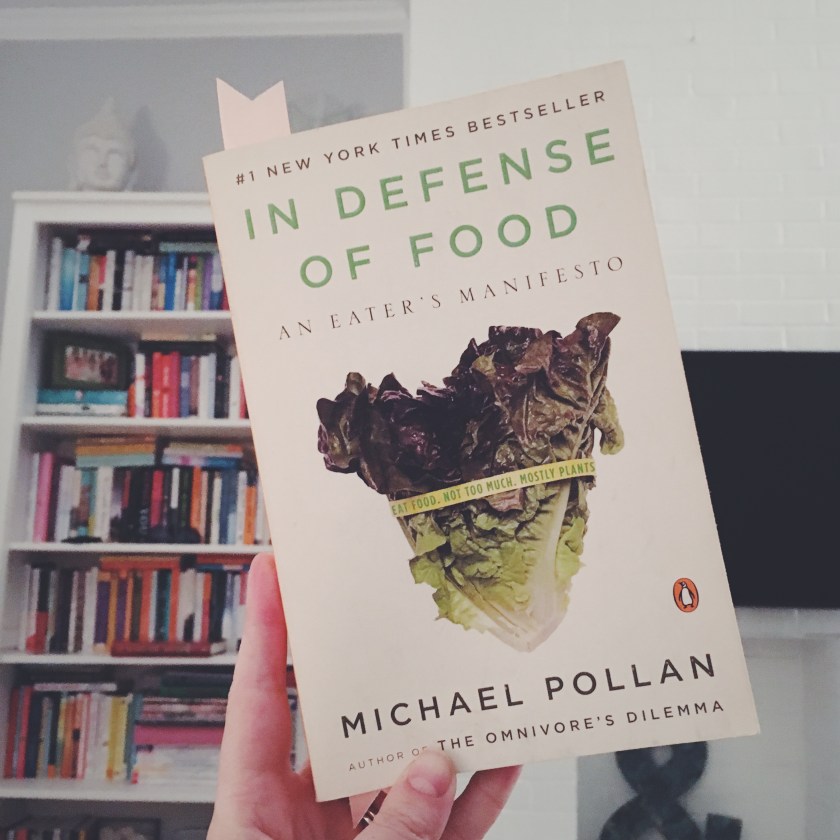
Truth time: This book wasn’t as compelling as I expected it to be. I bought it years ago, and because of my habit of buying books (much) faster than I can read them, it sat on my shelf until just a couple weeks ago. I bought it not long after it was first published, when this idea – that how we were being told to eat might not be the best way to eat – first became popular. We clearly still have a long way to go in terms of changing the accessibility and affordability of whole foods in our society. But I like to think that at least a little bit of what Pollan talked about in In Defense of Food has taken hold. Organic fruits and vegetables are a tiny bit more readily available; farmers’ markets have risen in popularity; trans fats have disappeared; more and more discussions are being had about sugar and good fats and whole grains. Some progress has been made.

What I found most fascinating, if not a little too in-depth at times, was the history behind how the Western diet came to be. And how food science and nutritionism aren’t necessarily the best ways to decide how we eat. Some of my favorite tidbits:

  • How much each individual’s makeup can affect how your body processes certain foods. (pg. 63)
  • The entire reductionist theory, especially that nutrients by themselves provide the same benefit as when eaten in the food in which they’re found is actually false. I consider myself to be fairly aware of what to eat/not to eat, but this surprised me. Although, when you think about it, it makes sense. For example: “The typical reductive analysis of isolated nutrients could not explain the improved health of the whole-grain eaters.” (pg. 110)
  • Learning WHY organic fruits and vegetables are better was like a lightbulb went off in my head. All this time I thought it was mainly because ingesting pesticides wasn’t a good idea. But one of the bigger reasons is the difference in soil and growth time. “It stands to reason that a chemically simplified soil would produce chemically simplified plants.” (pg. 115)
  • “USDA figures show a decline in the nutrient content of the forty-three crops it has tracked since the 1950s.” (pg. 118)
  • The food we eat today, since it is nutritionally less beneficial (see above), means we’re eating more but getting less essential nutrients. “Clearly the achievements of industrial agriculture have come at a cost: It can produce a great many more calories per acre, but each of those calories may supply less nutrition than it formerly did.” (pg. 121)

While I struggled through the information-dense first half of the book, I found the second half much easier to digest (ha!). My favorite thing about Pollan is how understanding he is that eating as we should has become extraordinarily difficult in our current culture. The suggestions he provides in the last part of the book are fairly reasonable, and made me feel like as long as I tried to follow them to whatever extent possible, it was better than nothing.

I may have had a hard time reading what was a relatively short book, but I’m glad I did. I felt like I learned quite a bit about how we eat has changed over time, and what we can do to rectify it. Now let’s go eat some plants!

Logic, Meet Eating

One thing I appreciate more than possibly anything else is logic. This may sound obvious, but I just simply enjoy a well-reasoned and thought out argument. To that point that I have been known to change my mind multiple times about an issue (sometimes in the span of one discussion) simply because of logical, articulate points.

That said, it should come as no surprise that I loved Pollan’s book. Full disclosure: I started reading In Defense of Food almost two years ago, loved it, got distracted by a few fiction reads, and, since I felt like I had pretty much grasped the concept of the book, never returned. Until now. I reread and continued reading and found myself just as impressed as the first time.

It is such a good reminder of the fact that SO MUCH of what we as Americans are ingesting is not even food. Pollan points this out throughout the book and it’s worth repeating: we are not eating food. We are eating food product. I was about to make a point and decided to test myself first, so I just got up, went to a cabinet, and grabbed a box of flavored rice. There are 20+ ingredients and only five are things I recognize as belonging in the rice (rice and the five spices used to season it). Clearly I should just make the rice and season it myself. Doing so would save me from ingesting chemicals and get me closer to eating actual food.

The other interesting little nugget that I find myself repeating to basically everyone when the topic of eating in American or this book comes up is how recently it became possible to eat foods that are out of season and beyond our cultural heritage (i.e., only the foods our parents cooked for us). Fascinating.

I’ll tag onto what Katherine C. said and repeat here that Pollan’s rules for food and eating are so simple, and if you’re looking for an easy, completely manageable New Year’s resolution, here it is:

  1. Eat food.
  2. Not too much.
  3. Mostly plants.

Thanks Michael Pollan, I’ll be trying my hardest (but probably still splurging on some Oreos, because I’m a human).