Latest Posts

August Book

Against all odds, summer is still alive and well! And we want to enjoy every last bit of it… are you with us?!

This month’s theme is {Beach Read} … for pretty obvious reasons. Beach season is still in full swing and this may be our last chance to soak up some sun and sand before fall makes its inevitable debut.

Some of you might be asking, what’s a beach read? Well, it’s a book that’s bright, fun and not terribly long or intense. It’s a low-maintenance friend to spend time with while relaxing in the summer sunshine. Granted, that means different things to different people. But if you enjoy the company, that’s all that matters.


For us, a great beach read mea1385673_512632012168190_979847906_nns Emma Straub‘s The Vacationers. Or at least we hope it’s a great beach read. Straub is a New York-based nonfiction author who hit her big break with this New York Times bestseller in 2014. The story centers around a family vacation to Mallorca, Spain and the figurative baggage they bring with them.

The reviews for The Vacationers have been mixed. Some complain of having a hard time relating to the many disloyal characters, and others praise the complexity of the female protagonist(s). And the A.V. Club claims The Vacationers, “is perfect summer reading: a beautifully written story that’s neither too depressing nor too charming, one that contains all the aching emptiness of wanting children or sex or companionship. It’s like sitting on a perfect sandy beach and knowing there’s jellyfish in the water, waiting to sting.” So I guess we’ll just have to read and find out.

We hope you’ll read along with us and share your progress/thoughts with us on Instagram or Twitter using #BooklyMark!

And don’t forget to check out our {August} playlist. It’s a perfect listen to accompany beach and book (if we do say so ourselves):

Feminism: Should We Be Over It?

“My own definition of a feminist is a man or a woman who says, ‘Yes, there’s a problem with gender as it is today and we must fix it, we must do better.’ All of us, women and men, must do better.” – Chimamanda Ngozi Adichie

I went into this book with high expectations (maybe I should start lowering them a bit…). I’ve been on intrigued by the topic of feminism recently – I’m currently in the middle of Bad Feminist and have recently started listening to the “Call Your Girlfriend” podcast – so I was eager to see what Chimamanda Ngozi Adichie had to add to the conversation. And while I realize it’s hard to fit much of anything into a mere 52 pages, it left me feeling a bit empty.

Because this only brushes the surface of the discussion. After reading the other Katherine/Kathryn/Kathryn reviews, I realized I was in the minority with my feelings on feminism today.

I agree that in many ways this subject is tired. Put it to bed already! Right? But unfortunately we can’t do that. Until feminism is no longer a dirty word, until women make the same dollar that men do, until women are addressed when entering a restaurant, there’s still work to do. There’s still a conversation to be had.

Sadly, I think it’s a bit idyllic to believe that all we have to do to get what we want is to go out and get it. If it were that simple we wouldn’t be having this discussion. Maybe it’s the conversation itself that has to change, or the very framework itself. I certainly don’t have the answers, but we have to find them somehow because there’s still work to be done. There’s still changes to be made in how women are viewed, treated, raised. And whether we’re bored with it or not, we can’t abandon ship now.

Yes, We SHOULD All Be Feminists.

As I read Chimamanda Ngozi Adichie’s TEDx talk and then Katherine C.’s review, one word just kept repeating in my head: “yes.” Yes to being unapologetic in our femininity – you can enjoy being feminine and still be a feminist. Yes to raising our daughters and our sons differently so they may enjoy a world where men and women are equal. Yes to equal pay and all the other benefits that go along with women having the same rights as men. Yes to embracing feminism and recognizing that being a feminist simply means supporting the basic principle that women should have the same rights and opportunities as men have. Yes to all of it.

All that being said, I do feel lucky that in the United States we have at least come far enough that some of the issues Adichie describes in Nigeria do not exist. But what kind of praise is that? “Well, at least when I tip someone the tipped thanks me and not my husband” is not quite a glowing recommendation for the state of women’s rights in the U.S.

I hope that when my (unborn, future) children are my age, society will be different and that, as Adichie said, the people will have changed our culture to include  and embrace equal opportunities for women. Because at this point, it is simply mind-boggling to me that this is still even a conversation.

Feminism: I know you are but what am I?

I agree with Katherine C.  I’m bored of this conversation.  That is not necessarily a critique of Adichie’s writing or thoughts. It just that it is just that – writing and thoughts.  Frankly, you have to be the most isolated naïve person (male or female) to not appreciate the glaring discrepancies in gender equality.  I am not just speaking to places in the world, like Nigeria, where these social constraints are newly being addressed.  I am talking about here at home.  We all see it and live it every day.  I get called “nurse,” “honey,” “blue eyes” on the daily at work.  But, you know what, it doesn’t bother me all that much because 1. I have bigger fish to fry and 2. I can’t let it.

As much as the concept of feminism is marred with a negative societal connotation of a movement of the brashy broad juiced up on hormones and self-rightoutsness, the real problem is simple.  The real problem is that feminism is not anything.  It isn’t an action.  It isn’t change. Feminism has become about “being a part of the social narrative.”  I may have gotten some grade A, gold metal level, liberal arts education allowing me to bullshit with the best of them (something I love to do), but what the hell does that mean?  Social narrative?  We have distilled down an enormously complex issue of gender equality with ever-pervasive effects on our society into a sad war cry of “it’s not fair” and “be nicer to me” that, frankly, lost its steam in the 1950s. We let feminism die and then come back to life as a faint ghost of an idea that is easy for any naysayer to tear down.

Writing this, I kept wondering, “Am I supposed to think this – let alone write this?”  I am a woman.  I’m not supposed to bash on feminism.  So I guess I should clarify, I am not bashing on feminism.  I’m bashing on the shell it has become.  I am a firm believer that no matter who you are or where you are from, no one is going to give you anything.  So forget feminism, and go get what you want. I was lucky enough to be raised by a hell-raiser to be a hell-raiser*. If I need or want something in this world, I should go ahead and get it myself because no one else will do it for me.  If I want to be taken seriously, I will be taken seriously.  That is feminism.  It is not pencil-pushing and abstract thinking.  It is not TED talks and podcasts.  It is not essays, writings and thoughts.  Feminism is doing whatever is going to make you fulfilled – whatever it is that makes you the woman you want to be.

So to the question, should we all be feminists? We are all inherently feminists. The question is what do we do with it?

* I maintain the right to remain a “weenie” as I see fit.

Why aren’t we all feminists already?

This was an interesting read. It made me think a lot about how I define feminism. Author, or speaker rather, Chimamanda Ngozi Adichie had a beautiful way of articulating complex issues and crystallizing her point for a diverse audience. I definitely enjoyed the read, but I think she only skimmed the surface. Which is unfortunately the current status of feminism in our county. In my opinion, the conversation she provokes in We Should All Be Feminists is the same one we’ve been having for 30 years. Yadda, yadda. Personally, I’m done with this broken record. Take it out of rotation. Let’s get on board with the issues already and elevate the conversation.

Don’t get me wrong, I liked all of Adichie’s points… It’s time the word feminism retained less of a negative connotation. In fact, it should have a positive connotation. And we should raise our daughters to a higher standard, instead of asking them to shrink themselves into smaller, more feminine, role. And all this change is within our control, “culture does not make people. People make people.”

But does this sound like anything new? Definitely from Adichie’s perspective as a Nigerian-American woman, it sounds like this is new information for her native culture. But as an American woman, it frustrates me that we’re still having this conversation nearly 100 years after women’s suffrage. And yet we still haven’t achieved equal pay, paid maternity leave, a better solution to childcare, respect for women’s health and her right to choose, justice in the legal system for violence against women…. it goes on and on. And it’s nothing new. For generations women have faced these issues head on, and I’d hate to think any of the inequalities my mother or grandmothers faced, will challenge my daughter.

Yes, progress had been made. But not enough, and not fast enough. I wonder why. What’s taking us so long?

That’s a whole other can of worms. But either way, let’s move on. Let’s agree women deserve equal pay, paid maternity leave, respect in the work force, legitimate childcare resources, respect for personal health decisions, justice in the legal system, etc. And make it so.

Once we get that far we can move into the next phase of the conversation… when given equal opportunities, how do we achieve success? This will be a conversation about a necessary paradigm shift. Current tools and measurements of success are in place for a male-dominated world… but women are different. We differ on every level… our needs, biology, chemistry, sexuality, mentality, etc… so I hope when my daughter talks about feminism she’s instead asking the question: now that we’ve achieved equality, how do we want to define success and how will we achieve it for future generations?


Bookly Recommends {The Patriot}

We know that We Should All Be Feminists is a fast read – that’s one of the reasons we were so excited to read it this month! But if the essay has you hungering for more non-fiction, here are some recommendations from us to read during the month of {The Patriot}:

Under the Banner of Heaven by John Krakauer: One of the best non-fiction books you will ever read. Krakauer takes a deep look into the fascinating and disturbing world of Mormon fundamentalism.

In Cold Blood by Truman Capote: This is an American classic. It’s the true story of a series of cold-blooded murders in a sleepy farm town. Capote’s telling of the murders, the capture and prosecution of the murderers, and the aftermath of this horrific incident is chilling (read it with all the lights on).

Into the Wild by Jon Krakauer: A deeply moving story of a young man who journeyed to the Alaskan wilderness, Into the Wild tells of the last days of Christopher McCandless. The story is simultaneously sad and frustrating, but nonetheless interesting.

Unbroken by Laura Hillenbrand: One of last year’s big hitters in the world of non-fiction, Unbroken is worth a read if you haven’t devoured it already. Louis Zamperini’s life during World War II reads like a fiction, and his story is a testament to what the human body and mind can endure.

In Defense of Food by Michael Pollan: While not his most famous food book, it is certainly an interesting look at how we eat and what it’s doing to us. It opens your eyes to the food industry and demonstrates how most of what we are eating is not, in fact, food.

NurtureShock by Po Bronson and Ashley Marryman: If you have children, plan to have children, work with children, know children, or are simply fascinated by those short little humans that wander the Earth, you should read this book. It’s solid research presented in a digestible way about dozens of different issues and aspects of child development. Our resident preschool teacher KH took extensive notes for next year’s crop of students.

The Immortal Life of Henrietta Lacks by Rebecca Skloot: This is an amazing story that describes how one woman’s life, and her immortal biology, has been the reason for countless scientific advancements and cause for a tremendous ethical debate. It’s a fascinating story that you won’t believe you’ve never heard of.

Here are some other books that were on our {The Patriot} short list this month, take a look at what we almost read and see if there’s anything you’d like to try, leave your reviews in the comments.

  • Missoula by Jon Krakauer (can you tell we are Krakauer fans here at The Bookly Club?)
  • Lucky by Alice Sebold
  • The Girls of Atomic City by Denise Kiernan
  • Zeitoun by Dave Eggers
  • Love Is a Mix Tape by Rob Sheffield
  • Fairyland by Alysia Abbott

July Book

Pictured:Chimamanda Ngozi Adichie © The Guardian

We hope you’re enjoying summer so far! For this month’s selection we’re changing pace, from YA to non-fiction. Since July is the month when we celebrate our history, we figured it’d be a good time to get a little introspective and learn something new about what makes us who we are.


July


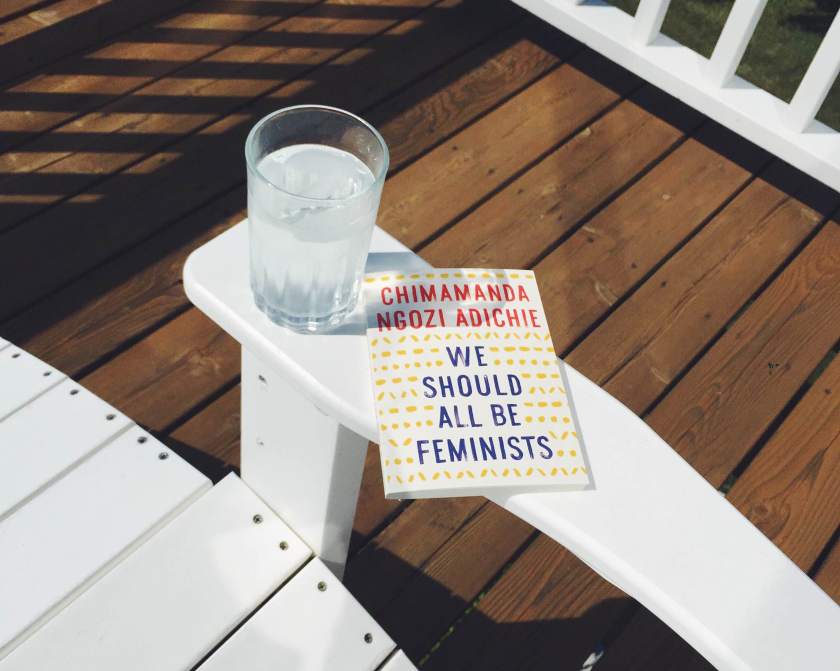
We did a lot of back and forth with this choice. We had a different book chosen just a few weeks ago… but as we promised, we want to read all types of ‘books’. So we’ve chosen We Should All Be Feminists by Chimamanda Ngozi Adichie: a 52-page essay. No excuses this month – give this one a quick read!

This book (or booklet as we should call it given the charmingly small size) is a modified version of a TEDx talk Adichie delivered in December 2012. Nigerian-born, she is the award-winning author of Americanah, one among many of her well-received books. In this essay, as a self-proclaimed “happy feminist” she offers a personal view and unique definition of feminism.

feministsTelegraph journalist Rupert Hawksley calls We Should All Be Feministsthe most important book you’ll read all year.” One might assume from the title that the subject matter focuses on one type of audience. But as Hawksley confesses, “I only chanced upon the book when a friend recommended it to me but, as a 26-year-old man who rarely engages in the feminist debate and who hadn’t heard Beyoncé’s song which samples Adichie’s speech, I found it a revelation.”

So hopefully, no matter your story, you’ll give this month’s read a try and read with us. In Adichie’s words, “that evening as I stood onstage, I felt as though I was in the presence of family – a kind and attentive audience, but one that might resist the subject of my talk. At the end, their standing ovation gave me hope.”

Obviously, as book-obsessed book clubbers we’re fans of the book/essay version. But, if you’re so inclined you can also check out the TEDx talk via YouTube…


Eager for the End

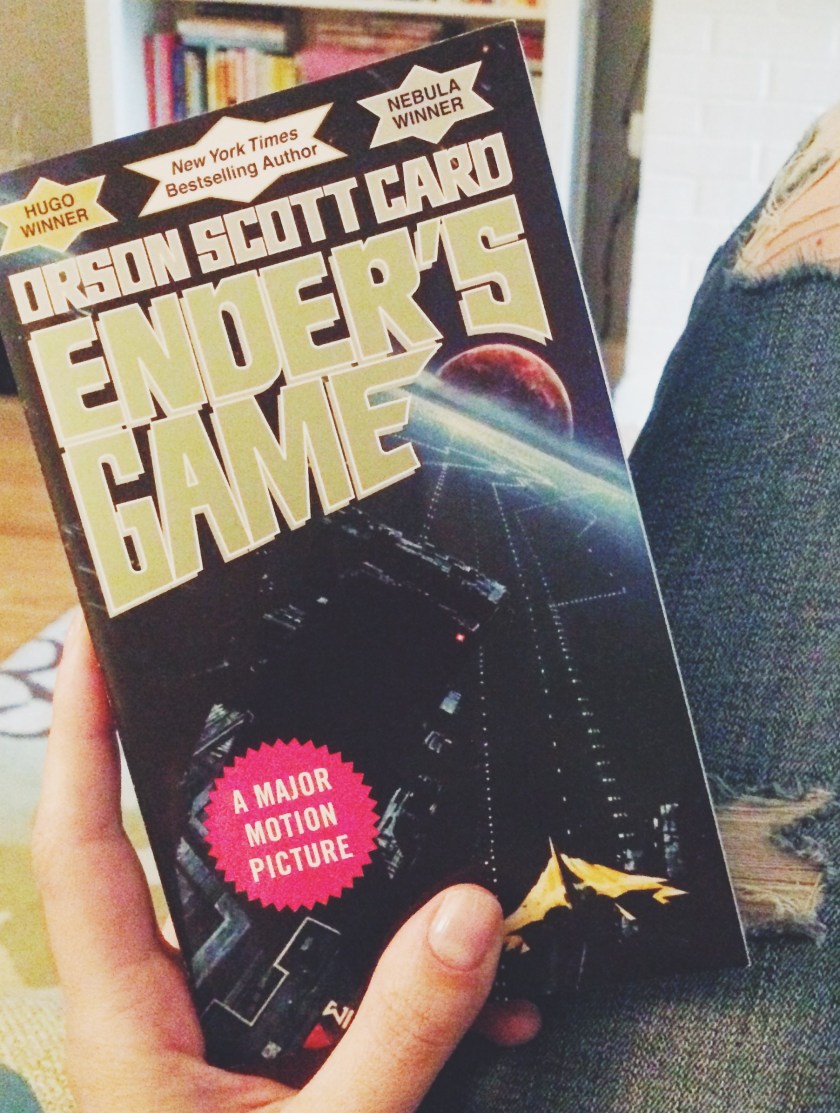
After reading (and loving) Ready Player One I was excited to give Ender’s Game a try. I’d heard from many trusted fellow book nerds what a great book it was but had shied away because I thought it wasn’t “my kind of book.” I should have trusted my gut. This book tested my patience as I struggled through the first third, finding nothing that captured me or held my interest. After setting it down for a few days (instead I read Wonder, which I would highly recommend, and The Good Girl), I picked it back up, determined to chug through. Plus, I was told the ending would change my mind.

Eager to get to said ending, I admittedly skimmed a large part of the middle half. So as not to give anything away, all I’ll say about the ending is I appreciated what they were trying to do. And I certainly enjoyed the last quarter of the book much more than the rest, I just wish I didn’t have to slog through the other three-quarters just to get there.

Some of the things that made it hard for me to latch on to the story: Ender’s age (six years old?!), the constant fart jokes (anyone else notice this?), and the lack of any sort of dynamic characters (I didn’t find any of them relatable). I also didn’t quite grasp Valentine’s and Peter’s storyline. Perhaps that’s expanded upon in the next book?

Overall, I’m glad I read it because it’s beloved by so many. Unfortunately, I wasn’t one of them.

Sooner rather than later

Hello, all. Long time no talk to. I have to say, it was a good thing we decided to combine May and June and to just read one book over two months… phew! Life’s been busy!

Anyway… I did finish Ender’s Game a few weeks ago. And I have mixed feelings. Overall, I liked it. But I feel like my impression suffered a little from high expectations. I know this is a favorite for a lot of readers in my generation, and I can see why. But it didn’t quite hook me as strongly.

Mostly because I didn’t love the pacing. It felt to me a lot like the third book in the Hunger Game series… 200 pages were dedicated to some very slow-paced events, and then the remaining pages had years worth of action. It felt a little rushed.

But the sprint to the finish line aside, there were some really interesting themes that pulled me in…

  • The difference between the male and female persona. Although I’m not entirely sure this book depicted those differences accurately, and I’ve read some disappointing things about the author’s views on women (just for a start);
  • The power of the written words vs. the power of battle;
  • The lies that adults feed children… in some ways the book felt like and elongated allegory for the tradition of Santa Claus;
  • And the list goes on… religion, hate, love, family, etc.

I did enjoy how prevalent and thoughtful these themes were. And I think it could make interesting required reading or kids in school with lots to discuss. I just wish Card had gotten to the point a little sooner rather than later.

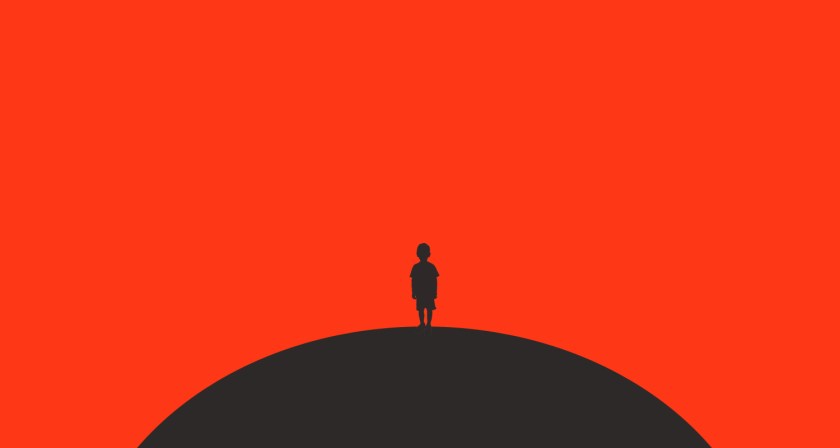
{Ender’s Game} Cover Redesign

I thought the hyper-scifi, ultra-nerd Ender’s Game cover could use an update. No offense to those scifi covers, they definitely serve their purpose. But I thought it’d be fun to rethink the look for Ender’s Game (it’s been a long time coming).

Since the book was first published in early eighties, I thought something colorful and slightly retro was fitting. And if you’re a fan, you’ll notice I used the colors of the Dragon Army color code… it seemed appropriate 🙂

Ultimately, as I was reading Ender’s Game I just had this image in my head of a young boy overwhelmed and surrounded by different pressures, looking so child-like and alone…